
Arts & Culture
Bits of Borno – the region’s resilience celebrated in photographs
Since the rise of Boko Haram, the media have painted a picture of Borno State in Nigeria as a place of death and destruction. Photojournalist Fati Abubakar, however, is using social media to challenge perceptions about her hometown. In ‘Bits of Borno’, her acclaimed online photo series, she documents the resilience of ordinary people in difficult times. Enajite Efemuaye caught up with her to talk about the power of visual storytelling, her love for photographing children and what media attention means for her work.

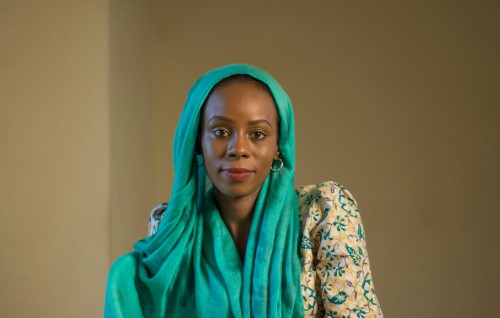
Enajite Efemuaye (EE): What do you see through your lens as you photograph the people of Borno?
Fati Abubakar (FA): What I see in Borno is strength, and that is what I photograph: A people who have been through difficulties beyond imagination but are still trying to live a normal life and are keen to move on.
EE: How do you separate yourself emotionally from the subjects of your photographs?
FA: I love photographing children. They are a joy. The reason that you see a lot of children on the page is because they are cheerful and blissfully happy. And I love to see happiness in unusual places.
The most devastating photograph of a child I took was of a street child at the garbage disposal under the bridge. It haunted me for days. It is definitely a traumatising profession but the story has to be told.

Girls at Galtimari Primary School, Maiduguri
EE: How long have you been a photographer and why did you decide on photography as your creative outlet?
FA: I have been a photographer officially for 11 months. I chose photography because visuals are very powerful. People stop to look at an image; it is arresting. I also felt that the story of Borno cannot be imagined and that’s what is expected when you write an article about it. I felt that only visuals could do justice to the true situation. And we don’t have a big reading culture in Nigeria. People have more of an interest in imagery.
EE: You do a bit of storytelling in the captions that accompany your photographs. Do you think that this distracts from the power of the images you have captured?
FA: Visual story telling is a well-respected genre of photojournalism. Sometimes the situation cannot be deciphered without a narrative. And in the special case of Borno, the stories need to be told. The photographs can stand alone but it is imperative that the story is added. I personally feel art can exist and is open to interpretation without narrative but I want my people’s voices to be heard and their stories to be told.
EE: A while back I interviewed a number of Internally Displaced Persons from Borno living in Lagos and the most often repeated desire was ‘we want to go home.’ It is a desire I see repeated by the people you spoke to. How much time do you think it will take to resettle displaced people back in their villages?
FA: Resettlement could take a while. Towns have to be rebuilt, and the military needs to ensure that they are rid of landmines and all the other threats. It is a huge task for all involved. At this point, there is no fixed time or date because of the complexities involved.

Women rush to a food distribution point
EE: Why is it important to you that people see a side of Borno not shown by media?
FA: It is imperative that the world sees a new side of Borno, given that our image is of death and devastation. Our strength needs to be highlighted. I want us to be viewed as people who are keen to heal and rebuild.
EE: How do you balance photographing people, some of whom are at the lowest point of their lives, and respecting their dignity? Do you get many people saying no?
FA: Dignity is something I insist on. I have to make sure the people I photograph have their dignity. I always talk to people about cultural sensitivity. As photographers we need to ensure that the people we document are not exploited. So I don’t photograph nudity, compromising situations or without consent. And also, when a person says no, I move on from them and don’t insist. But I don’t get a lot of no’s. I use a very soft approach. It is very much a community I am familiar with so it’s not difficult for people to agree. They identify with their own.
EE: In the last month or so, Bits of Borno and you as the photographer have received a lot of international media attention. What has this meant for you as an individual and for the work you do?
FA: The media attention from the international community has helped people view Borno in a different way, which I am happy about. I love that our strength shows and that Borno is bouncing back. For me as an individual, it has helped me. More people are sending me e-mails supporting and commending me, and also urging me to tell more stories. It is a good feeling. There is some interest in developing the project and I am thrilled about that.
EE: You are planning to have an exhibition later this year in Nigeria. What should we expect?
FA: Yes, I am hoping to have an exhibition soon, and my goal is to show that we are a people moving on, despite all of the difficulties. The resilience of the people of Borno must definitely take centre stage.