
Culture
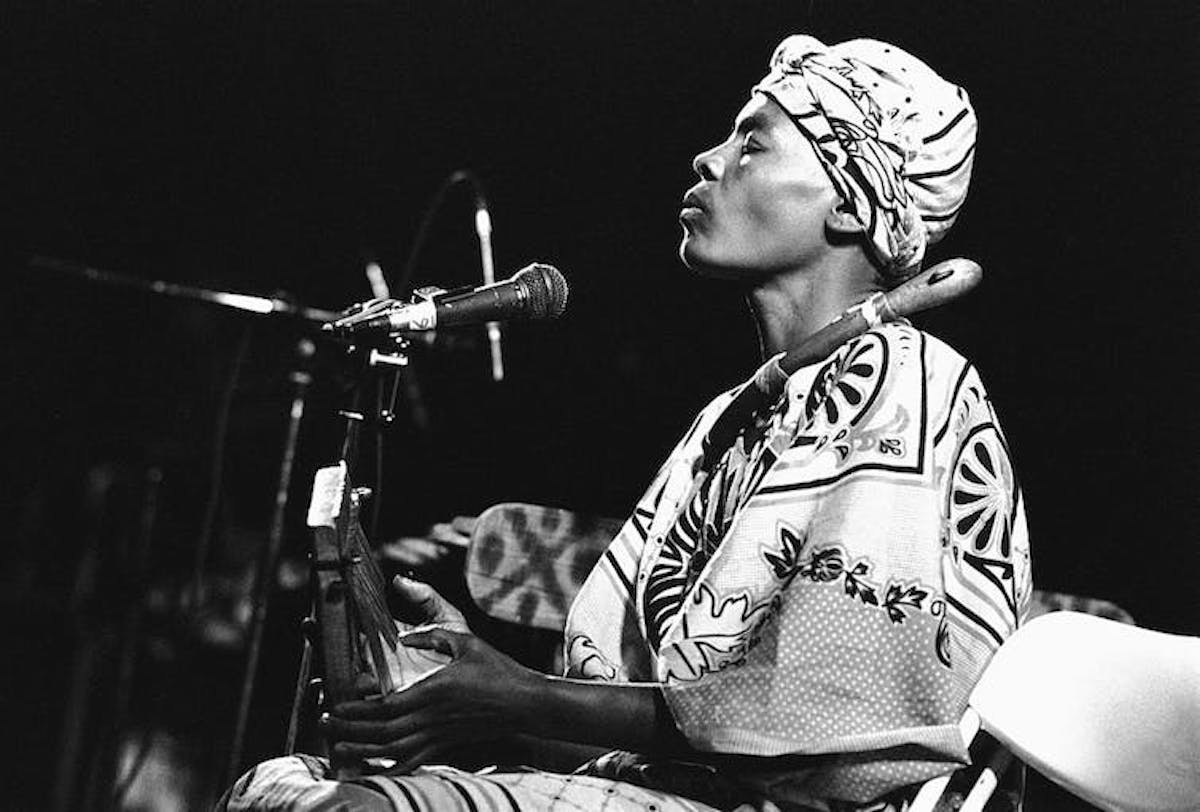
Stella Chiweshe: Zimbabwe’s mbira queen, rebel music star and pioneer
She paved the way for women to play the mbira – and then took the ancient tradition global.

Gibson Ncube, Stellenbosch University
Stella Rambisai Chiweshe, affectionately known in Zimbabwe as “the queen of mbira” or “Ambuya (grandmother) Chiweshe”, passed away on 20 January 2023.
Chiweshe was born in July 1946 in the rural area of Mhondoro in the Mashonaland province of northern Zimbabwe. She began playing the mbira, an ancient thumb piano, in the early 1960s. At the time she was reproached by both men and women because she had dared to play an instrument that was ordinarily played by men.
Chiweshe was not only a singer, songwriter and musician who performed extensively across Africa, Europe and the US. She was also a cultural activist, a pioneering woman and an educator. She founded the Chivanhu Centre in Zimbabwe, home to the preservation of traditional music and culture.

Chivanhu is a Shona word for humanity. One of her goals was to ensure that the mbira continued to be the heartbeat of Zimbabwe’s people. As the African adage goes: “When an old person dies, a library burns to the ground.” Her death is indeed a great loss to the country.
Pioneering force
The mbira, a powerful spiritual instrument used to communicate with the ancestors, was often played at traditional ceremonies by men. Historians trace its origins to 3,000 years ago on the west coast of Africa and to 1,300 years ago in the region that is now Zimbabwe. Chiweshe explained in an interview that:
Men played mbira, and for me to play mbira meant that I had to sit with men on either side of me. It made the women very uncomfortable.
Not only did the young Chiweshe face criticism from her family and community. She also had to contend with a ban on the instrument by the British colonial administration because the idea of ancestral worship went against their Christian values.
Chiweshe was a rebel by nature. She defied the British and played at underground night ceremonies. She would go on to be a pioneering force in several other ways.
She took mbira music beyond Zimbabwe and did important work in popularising the art form.
She was able to help fight the stigmatisation of this spiritual mu