
Business
In conversation with Carl Terver: Kelvin Kellman on his poetry, politics, and art
Carl Terver spoke with the poet and writer Kelvin Kellman who recently concluded a residency as a James Currey fellow in Oxford University.

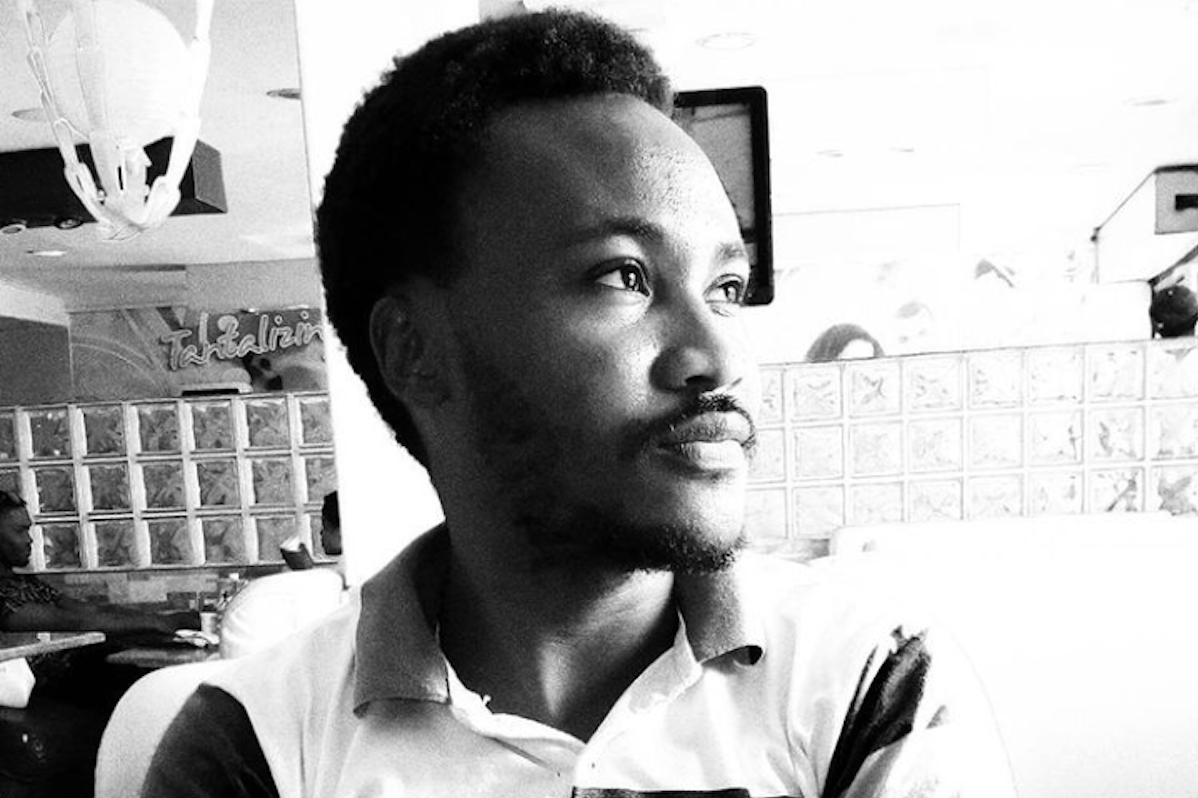
Kelvin Kellman, who has been focused on his writing and his work as editor-in-chief of Stockholm Review, generally, for reasons best known to him avoids the public eye. But he shares some of his thoughts on politics and art, as well as his poetry in this interview.
CT: Your literary production over the years basically has been poetry. So, it is right to assume your first calling is poetry, that is, you are first of all a poet. Can you remember your first poem and the creative process of writing it?
KK: My productions have been mostly poetry by no premeditated effort. Editors have often favoured my poems for reasons best known to them. But to be on the side of candour, I must mention that I mastered the dynamics of poetry before that of prose. My early poems could pass for poetry much more than my early stories could pass for good prose. As for the first poem I wrote, it was titled “Iretiogo.” Those were days I had bathed in Odia Ofeimun’s poetry to the point of smothering. Evidently, there was this young lady I was enamoured of and I wrote a poem in her praise. I was an undergraduate at the time, and worked with an editorial board. Long story short, so many people read it and began to look for me. [Laughs.] Ireti, whom I had shown I was smitten by her but hadn’t verbally expressed my intent, also happened on it and asked for a sit-down. She explained how she felt flattered by the poem but stated that she was in a committed relationship. I moved on with my life.
You’ve come a long way from that. Your poetry has got discipline and depth too now. I am sure you must already be thinking about your first full-length volume, no?
I have a first collection ready and I am working on my second. In truth though, what I call my first is my second or maybe third. I don’t know anymore. Because I threw away my earlier cache of poems from irritation when I returned to them after time away reading and studying—a gesture I suppose you understand.
Of course, the same way as the sympathetic rejection of your love. In fact, I think we should return to that because a whole lot of literature is dedicated to understanding unrequited love. And I think rejection from editors, too, can sometimes feel like unrequited love. What do you say?
It is funny you say this because I have a poem on that account; a poem about rejection from editors. I hope it gets out soon. But in more ways than one, I suppose rejections mirror life. Nobody cares. As acerbic as it may sound, it is how life operates. It doesn’t matter how much you love the girl; if she is not into you, the depth of your love and tensile of your stretch is immaterial. The same goes for writing.
But the beauty of writing is that, if one continues, however long it takes, someday, someone will take notice
It doesn’t matter how much time, thought, and commitment goes into a piece, if the editor isn’t into it, it’s (sadly) not worth their time. But the beauty of writing in my opinion is that, if one continues, however long it takes, someday, someone will take notice. And that patience, that wait, which often builds a depth of field owing to revisiting one’s work and seeing it with incessantly fresh eyes, is not ignorable. Ta-Nehisi Coates comes to mind in this regard. I think we can make parallels on this account. Perhaps lovers should not throw in the towel. Waiting often builds character in a person like nothing else I know. It is only a matter of time before someone who truly deserves you come along.
In one of your poems “Survival,” a very profound poem haunting in its formal elegance, racism is highlighted down to the African continent. The poem complicates the definition of racism further. Can you speak more on this?
I wrote that poem when I read in this article that some persons of African ancestry who are Mexicans and have been all their lives, were rounded up and deported to Haiti for looking like Haitians. It was a really curious thing to read. How do Haitians look other than the obvious? The irony is that Mexicans are racially profiled and are subjected to horrendous racist injustices that perhaps only persons of our kind have endured. I think there might be a need to stop seeing racism as a western problem but a global one (this does not take away the fact that the west has done some really dreadful things by way of racism). I have encountered Africans who embody the belief of racial superiority too. It reminds me of the Negritude movement of the 30s, which in defence against French racist and imperialist overtures, hatched a philosophy that reflected tenets of the very same racism they were trying to fight. I recall Jean Paul-Satre calling it anti-racist racism.
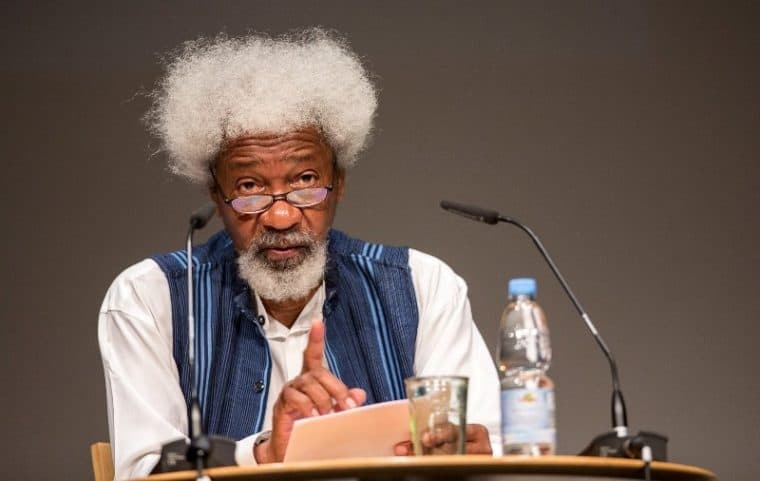
File photo: Nobel Laureate Prof Wole Soyinka addressed the 8th Commonwealth Conference for Heads and urged for the arrest of corrupt leaders. Photo: Facebook/WoleSoyinka
If I recall, Soyinka shot blistering bullets at the movement too. Racism is awful, and its atrocious tentacles stretch across different fields and endeavours of existence. One would suppose that more knowledge, which has been the hallmark of our information age, would help heal and bridge this divide, but we shockingly continue to witness a fearsome solidity of this menace. From my travels I cannot count how many pudden-head Caucasians I have come across, as much as I have of persons of my pigmentation. Of course, it leaves me wondering, on what grounds does this person assume his misplaced superiority? It reminds me of the quote by Nathan Rutstein: Prejudice is an emotional commitment to ignorance.
I don’t think racism is always about a particular race’s superiority over the Other. I think it is also about dread, loathing, contempt that can sometimes be all mixed to cause to steer aloof or become violent. For instance, I think the subtle racism of the landlady in Wole Soyinka’s “Telephone Coversation” is borne out of dread. But I must agree the irony you’ve pointed out is moot for the overwhelming amount of cultural productions of today that somehow still seem insufficient to stem the corruption of the human soul against the Other. It is a theme you returned to in another poem titled “Body Count.” I have pondered on these lines: “It is a story of those men donning / police badges whose fathers burned crosses.” You go back to the modern foundation itself and the institutions that enable racism.
When contemplating the matter of racism, it does not take long to see how tentacular its effect and manifestation can be. Sometimes one is drawn to hinge it on capitalism, other times on economic affluence, like in the case with China: we saw how humble and humane the Chinese were fifteen-twenty years ago. Self-effacing to the point of honour. But alas, they became an economic giant house and the racist manoeuvres they now exhibit is as shocking as it is as frightful. Sometimes also, as is the case of ignorance—pure dread like you say—for what one does not understand. And yes, I believe a large part of racism stems from the generational. Words spoken to the hearing of children in the privacy of closed doors. Passing prejudice from a generation to another. I have read about policemen in the United States with links to the Klan. Should it then be surprising that their killings are often aimed at unarmed men of African descent, when just generations ago there were plans to exterminate African Americans? When we remember that a cop was caught on camera pacifying a woman (panicking at the sight of a cop with a gun) with whom he shared skin-colour, that he would never shoot her or their kind, that the only people the police shoot are African Americans, it makes you wonder if we are truly in the 21st century. I have never been more afraid of and for America.
Another theme that seems to have captured your imagination is rustic exaltation. The way you handle it is very calming. It is a sharp contrast to the violence of history in your work.
Irrespective of the many distractions and complexities of the modern world, in the end, I think the typical Segun aspires towards a life of simple joys; every man secretly wishes he was a child again. And as Nigerians are wont to say: adulting na scam. In my opinion, basic as it may seem, few things transcend to love and to be loved; to care and to be cared for in return. This is, perchance, why we are social beings, to draw happiness and inspiration from dealing with others. It is probably why some of the happiest people on earth are from worlds diametrically different from worlds with supposed civil and technological advancement. This belief of mine, I suppose, leaks into aspects of my work.
The abundance of literary talents in Nigeria today is quite fascinating. We are never short of quality writing in Nigeria. Who are the contemporary poets you feel privileged to be writing or sharing the space with? And I think today’s writers have it easier than those before them—well, you’re welcome to disagree—what are the disadvantages peculiar to writers of this moment?
I could list names but, in the end, I believe art is largely subjective and orbits around the axis of taste. But among folks writing today, I think D.M. Aderibigbe, Adeeko Ibukun, Nome Emeka Patrick, Joseph Lukpata, Umar Abubakar Sidi, Servio Gbadamosi, Dami Ajayi, Femi Morgan, to list but a few, catch my attention. As for comparison between older and younger writers: While we have more access to platforms and perhaps opportunities owing to the internet, I would like to think the older writers are much more authentic. Clarke was different from Soyinka and Okara, and they all co-existed in their respective heights. Odia’s fiery could be felt from the cadences of his lines, his love poems are imaginatively inventive and profound. Alas, today, almost everyone sounds the same. If a poet wins a prize and critics dissect his work to see why he won, it does not take long to see others toeing the same line: using the same images, touting the same motif. I also suppose the political climate in these times has sadly forced poets to be quite unidirectional. Very few people hold contrary opinions against the mainstream, as the fear of cancellation looms over heads. One contrary tweet and your career is over, yet, the powers that be every so often peddle the belief of their commitment to diversity and freedom of expression. The irony is not just laughable, but frightfully sickening with a tinge of mischief.
Whom do you write for, and who is your primary audience? I am asking this because most of your recent work is published in reviews and magazines not based in Nigeria. I wonder if this is deliberate or a mere coincidence.
[Laughs.] To begin with, there are not many journals in Nigeria. But to answer your question, I very much, for the most part, belong to the school that believes an artist is a citizen of the world, and that art is universal. I would not say the effort is deliberate, but using Submittable these days cannot help but shove foreign journals in your face all the time. That said, I remember one editor, in accepting my poems, told me how much the poems blew him away. One of the poems was about out-of-school girls picking rubbish from a dump in Sokoto. He caught, perhaps with the same intensity, as I caught the scene and documented it. This is the function of true art: it unifies experiences; it erases borders.
Your poetry has got this kind of force—of history and protest—which brings me to ask about the functionality of poetry for you. A poet must first define poetry to himself before he can do the same for others, so, I would like to ask: what is poetry to you?
To his credit and perhaps otherwise, in his collection, The Poet of Dust, Umar Abubakar Sidi, whose poetry reflects his creative insanity, tried to define what poetry and who a poet is. But he still fell short. Can one really put in words who a poet is? Or the rather maddingly ambitious question of what a poem is? Poets have been known to be soldiers, statesmen, revolutionaries, quiet law-abiding citizens, and outcasts. One can write a fine piece of prose and in the end, it manifests as a most consummate poem. Poetry is too formless to be described or defined, if you ask me. But poetry for me is one creative endeavour where my heart is in sync with my mind.
Speaking of poetry, to you, as where your heart is in sync with your mind, I recall something Pablo Neruda said, that “Political poetry is more profoundly emotional than any other—at least as much as love poetry—and cannot be forced because it then becomes vulgar and unacceptable. It is necessary first to pass through all other poetry in order to become a political poet.” I think this is quite a way to put your idea of heart-in-sync-with-mind into perspective. Neruda is talking about the poetry that comes from the furnace. What’s your take?
In my opinion, I think writing political poetry is the height of awareness and responsibility for the poet. Any idiot can be a lover or naturist or bard. But it takes hardboiled gumption and grit to go against convention and socio-political order to offer a different path; to ideate a different reality from what’s accepted. And that is who a political poet is. That said, the order is immaterial, if you ask me. What matters is that a poet rises to the occasion of speaking their truth to power. But in the analytical sense of things, I suppose Neruda refers to the growth of the human soul with respect to poetry. We all pass through phases as human beings and express those phases through our art. However, there comes a time when our soul yearns for raw truth and ideas so that we begin to question conventions and social realities. This is often when the political is birthed in the poet. As for my heart-and-mind syncing, what I mean is the yearning of m