
Opinion
Placing art and discourse in a primary position and geography in a secondary position: An interview with Bonaventure Soh Bejeng Ndikung
Bonaventure Soh Bejeng Ndikung (PhD), born in 1977 in Yaoundé, Cameroon, is an independent art curator and biotechnologist. He is Curator at Large for Documenta 14 (Artistic Director Adam Szymczyk), the founder and artistic director of the art space SAVVY Contemporary Berlin, where he has directed and curated exhibits with more than 200 artists from five continents. He is also co-artistic director of Galerie Wedding, a communal gallery space in Berlin. He has been living on and off in Berlin since 1997. He recently participated in the RAVY festival in Yaoundé, Cameroon where he gave lectures on art, epistemological pluralism, his curatorial approach and his skepticism towards Afrofuturism.

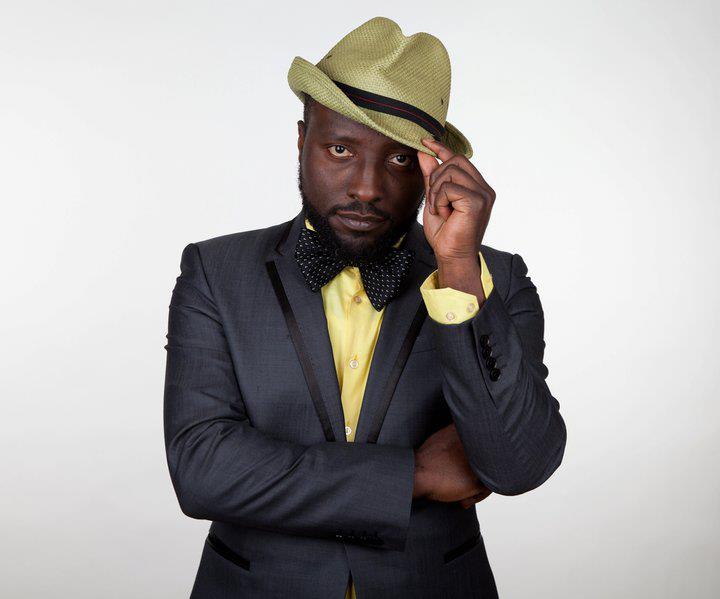
Dzekashu MacViban (DM): Your curatorial approach states that “by bridging the alleged gaps between ‘western’ and ‘non-western’ art, you question these circular terminologies, placing art in a primary position and geography in a secondary position.” How do you achieve this, given that most structures in place position geography in a primary position and art in a secondary position?
Bonaventure Soh Bejeng (BSB) : One of the possibilities of achieving this is by doing thematic exhibitions; instead of doing an exhibition where you say this is an African art or European art exhibition (where geography becomes primary) you can do a thematic exhibition called— for example—“Giving Contours to Shadows”, or the exhibition we are doing now at Savvy Contemporary titled “The Incantation of the Disquieting Muse”, and then you invite artists, some of who happen to come from the African continent, others from Latin America, Asia and others from Europe and America. Thus, at the end of the day it is about describing the metaphorical ball, and how would you do that without looking at it from different perspectives, but at the end of the day, it is about the ball. By looking at it via different perspectives, you are trying to find nuances in languages or different ways in languages that can define that ball. Thus, to answer in very practical ways, we do that by looking at thematic expressions and philosophical discourses such as the things that touch the nerve of time, and these have different meanings or are expressed differently depending on where people come from. The quote of mine you are citing was made at a time when one had a lot of those continental or national exhibitions. I for one do not believe in national exhibitions. I do hardly even believe in the concept of the nation state and such geographical and geopolitical constructs. So that was an effort to avoid such boxes by deconstructing them.
DM: With the proliferation of Africa-based curators, what in your opinion accounts for the lack of books on art history by African curators which focus on African art?
BSB: I can give a reason from a personal point of view why I think it is so, but it is also important to know what role art plays in our societies today. How many people are interested in investing their time and money in producing a book on African or Cameroonian art, for example, and how many people are interested in buying those books? So one might start by looking at it from the vantage point of demand and supply. Take the case of Cameroon… what structures do we have here? With that I mean art history faculties in the universities, seminars on critical writing and theory in our universities and high schools. These are prerequisites that should actually be fulfilled before one can really start expecting much. One actually needs museums, gallery structures, independent art spaces included, to support individuals that wish to write books on African art and more.
On the other hand, I must say, there are a couple of very good books, such as the wonderful anthology that Revue Noire (https://www.revuenoire.com/en/edition/antho-african-art-xxth/) did, Contemporary African Art since 1980, which Enwezor and Okeke-Agulu did and much more stuff by the likes of Oguibe, Hassan and many more. And there are more individuals writing and doing stuff on some particular artists, such as monographs like the one Bisi Silva did on Pa Ojeikere, or what Koyo Kouoh did on Issa Samb etc. So it’s not entirely true that there is nothing happening, because people are doing it in various formats. But the question that one should pose too is, do we really need books that claim to portray a complete history of African art? Maybe we should become a bit more particular than general. With this I mean to say that I actually do advocate for more extensive publications on singular artists and art movements from the African continent than an umbrella book. We at SAVVY Contemporary have done a couple of reader formats that accompanied exhibitions. This too is a way of writing a history of contemporary African art. In any case, instead on reflecting on why there is not, let’s just do them, let’s just write the books. We definitely need more.
DM: Do you think that some curators act as gate-keepers rather than facilitators in the art milieu?
BSB: There’s always a very fine line between the gatekeeper and the facilitator. Those who think that they’re facilitators tend to be gatekeepers because at the end of the day, you cannot take in everybody, because not everybody is good. At the point in time where you set your criteria of what you think is important, then you’ll become a gatekeeper, even if you are a facilitator because you have set a criteria. This is a threshold and those who cross that threshold are the people that fit into the kind of work you want to do. Those that do not do that, and their work is weak, or not as important will tell you you are a gatekeeper, although you are facilitating others. So there isn’t one person who is completely a gatekeeper or completely a facilitator because you’re always at that threshold, always negotiating between those two things. Whoever says you are a gatekeeper should go ahead and do his own stuff and be a facilitator for the rest of the world.
At the point in time where you set your criteria of what you think is important, then you’ll become a gatekeeper, even if you are a facilitator
DM: During your talk at the Goethe-Institut Kamerun, within the framework of the RAVY festival, you said the following about Afro Futures: “what is it about the future and running away from the present?”, and you added that your approach was to look at a parallel reality, to be precise, manifestations of witchcraft or witchery. Do you think afrofuturism and witchcraft are irreconcilable?
BSB: They’re not irreconcilable. Not at all. Actually, that’s what I’m playing on, because if witchcraft is not futuristic, then I don’t know what futurism is. You see, science fiction as portrayed in Hollywood movies is not the kind of future we should be necessarily thinking of, it is more complicated than that. Also, showing that some African nations tried to send a mouse to the moon and it failed is not futurism to me. When I asked why are we running from the present, I meant to put a spotlight on the superfluous usage and misusage of the terms ‘future’, ‘futurism’, ‘futuristic’ etc. I am bored by such. I think if we really want to explore futurisms then we have to look into complexifying the past and present realities. Especially what I like to call parallel realities. This is where witchcraft comes in to explore the unknown, which is not simple realism or the simple present. It is important to explore this space as a space of technology, spiritualism, and as a political and economic space. For example, how do you see the capitalist economy within the context of witchery? Take the example I gave during my talk when I said, how can you see something like the concept of nyongo as capitalism? and this reflects one of the captions I gave “Na Who Gi You For Nyongo?” even when you look at the whole cultural scene and nonprofit economy. It is important to ask “nonprofit for who?” because at the end of the day somebody is making profit from that, while you think it is a nonprofit, so maybe someone gave you to nyongo. So maybe the futurism we should be looking at is a parallel reality rooted in our own cultures. Anyways… this whole thing on Afrofuturism bores me to death.
If witchcraft is not futuristic, then I don’t know what futurism is. You see, science fiction as portrayed in Hollywood movies is not the kind of future we should be necessarily thinking of, it is more complicated than that.

THE INCANTATION OF THE DISQUIETING MUSE © India Roper-Evans

THE INCANTATION OF THE DISQUIETING MUSE_ Nassim Rouchiche | Ca Wa Waka © India Roper-Evans