
Politics & Society
Humans not witches! We persist and say their names: Nyanga’te, Moraa, Sigara, Sindege
October 17, 2022 marks the first anniversary of the horrific lynching of four elderly Kenyan women: Agnes Moraa Ototo, Sabina Sindege Mayaka, Jemimah Nyangáte Mironga, and Rael Sigara Onkware. The four women were branded as witches and viciously attacked by a mob of men, women and children.

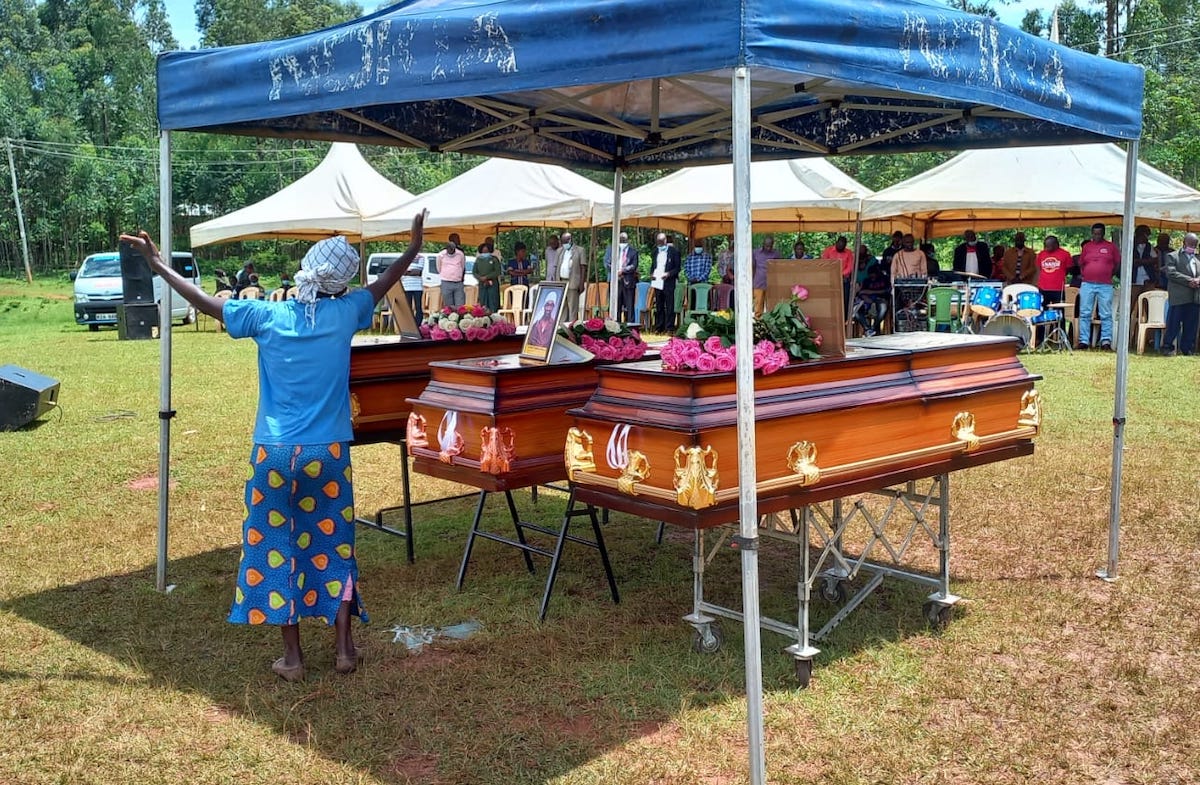
We persist! We say their names!
Why do we say their names? We say their names because, today October 17, 2022 marks the one-year anniversary of the horrific lynching of four older women – Agnes Moraa Ototo, Sabina Sindege Mayaka, Jemimah Nyangáte Mironga, and Rael Sigara Onkware in Marani, Kisii County, Kenya. The four women were viciously attacked by an angry mob of men, women and children who had branded them witches.
Apparently, as alleged by community members, on that fateful Sunday morning a pastor from the local Lutheran Church was at the scene of at least one of the murders with a Bible in hand. Earlier in the day, the man of God had directed that community members hold or touch the Bible as testament that they were not the witches who bewitched a school going teenage boy.
By the end of that day, four older women had been rounded up – some literary snatched from their homes and the hands of their loved ones – including the ill and bedridden, accused of practicing witchcraft, hacked with machetes, in some cases stripped naked and dragged on the ground before an inferno was created for them and on their bodies to ensure that they were burned to death. Most were alive. Screaming and soul-piercing ashes and debris on ground grotesquely mark the cite of these atrocities against humanity.
Just like that! Just like that, four older women – all of them widows – were murdered in cold blood in Marani, Kisii county. Fellow humans in an angry frenzy that had room for cheerful singing, chest-thumping touting, chanting and mockery – some carrying crude weapons, hoes, huge sticks, and stones, while others used their hands and feet to slap, shove and kick – brutally, assaulted and killed four terrified older female humans pleading for their lives, because they had been successfully portrayed by some as evil sub humans, and therefore not deserving of life nor worthy of being treated with dignity and respect. They labelled them witches. Abarogi in Ekegusii.
Today, we say their names – Nyangáte, Moraa, Sigara and Sindege – to remember them as humans of the female species, whose human rights were grossly violated and who deserved to be treated with dignity and respect. We remember them and their loved as we continue to seek justice for them and their families. They did not deserve to be killed.
We evoke a collective protest of their killing in solidarity with all humans who “persist” across the world and challenge systems of oppression that often disguise themselves as “law and order” that seeks to discipline “wayward” women as well as ethnic and other minorities. We say their names in solidarity with all social and political movements around the world – especially in the African Diaspora – that remember and articulate the names of victims of systemic racism and other oppressions to re-member the fabric of our collective, interwoven, interdependent, and interconnected humanity. We see you in the spirit of Utu-Ubuntu-Obomwanyabanto.
Diversity, equity, inclusion and belonging
We persist and say their names because embracing and operationalising the values of diversity, equity, inclusion, and fostering belonging helps to remind us of who we really are. Human. Humans embodied in a Higher Presence that honours life in all its forms, everywhere and every day.
Humans who as show up as beads on the broad spectrum of the diversity that we represent through our varied ages, genders, sexual orientation, state of mental and other health dimensions, socioeconomic class, shapes, sizes, appearance, religious and spiritual inclinations, belief systems, races, ethnicity, ability, marital status, and others.
Humans who are all equal in human values and dignity and therefore deserving of equal opportunity to live lives worthy of human dignity, free of violence and harassment and repugnant untimely death at the hands of angry fellow humans.
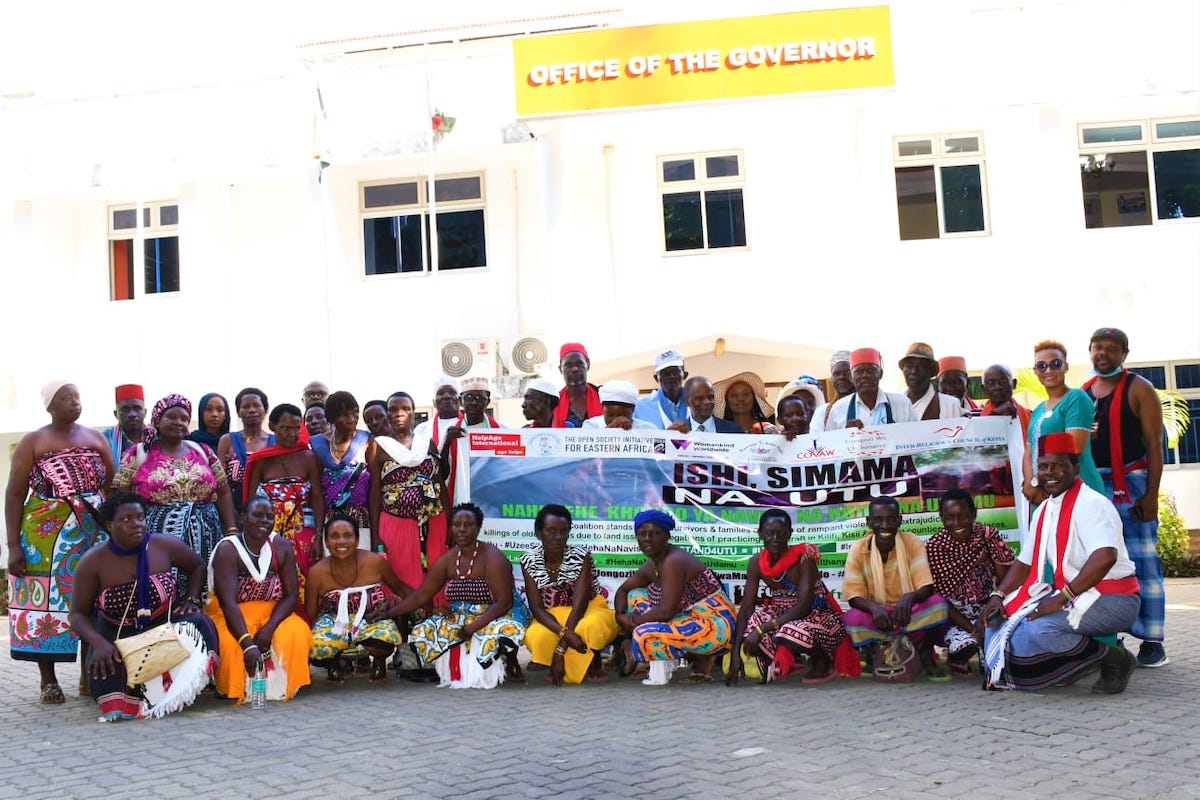
Utu Coalition members – visit to Kilifi County Government offices – May 27, 2022
Humans who deserve to participate and be included in all spheres of life and not discriminated against because of their age, marital status, mental health state, socioeconomic state, physical appearance, grey hair, etc.
Humans who belong in all spaces and most significantly on this planet which we all share and call home. Who has the power and mandate to determine that any human does not belongs or not? Humans who are seen, heard, acknowledged, and embraced in the spirit of Utu-Ubuntu-Obomwanyabanto because:
I Am Because You Are, You Are, Therefore I Am.
Humans who live from the ‘heart’. Humans who lead from the ‘heart’. Humans who see, feel, hear, think, touch, smell, and are, from the ‘heart’, know that we all belong for we are one. All heart in one love.
Gusii, Kilifi and other communities lose their souls: Killing older persons
While older persons have and continue to face a myriad of challenges that some groups within civil society and government have been trying to address, the issue of extreme violence and extrajudicial killings of older persons after being labelled witches hasn’t received the attention it deserves. Those who are murdered are predominantly women, especially widows in places such as Gusii (Kisii and Nyamira counties) but men are also targeted in the coastal region of Kenya such as Kilifi County. These killings have come to be known by many as witch burning or witch lynching. A gross violation of human rights that must be addressed as a matter of urgency.
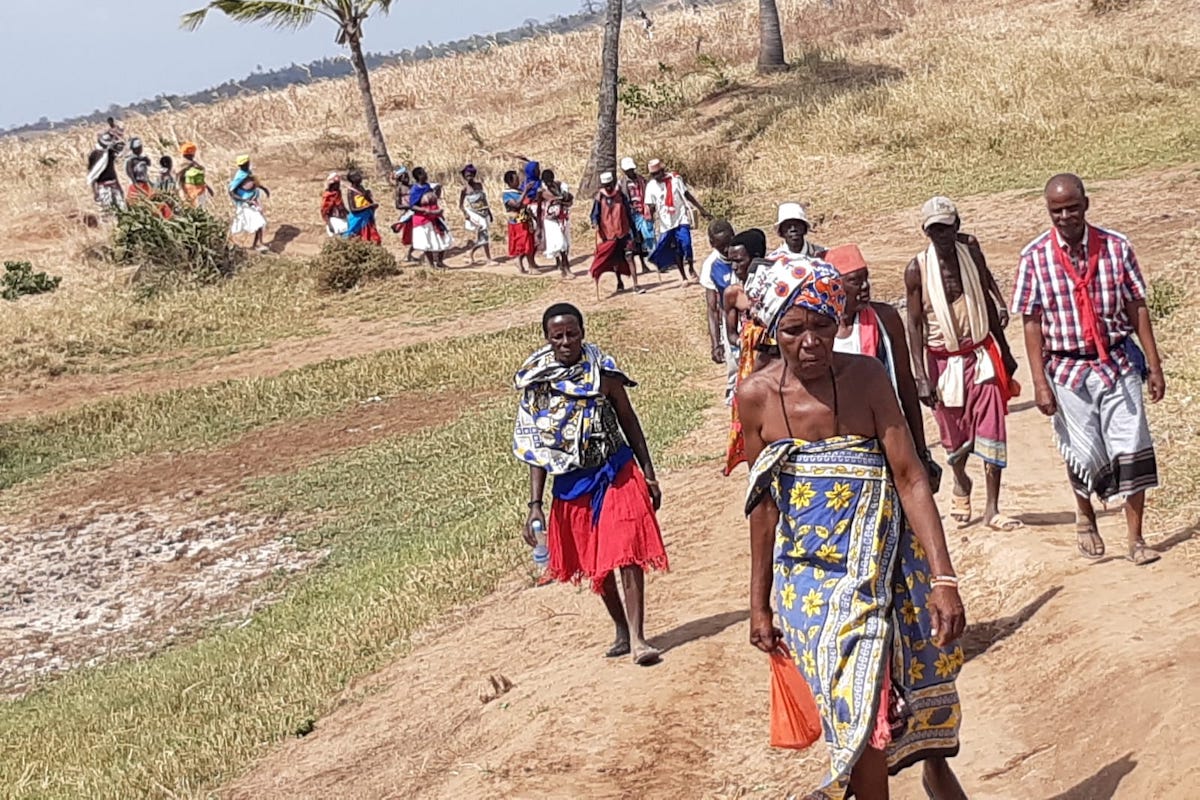
Peace and Justice for all (Amani na Haki kwa wote) Mekatilili Wa Menza Mashujaa Peace Walk. The Peace Walk highlighted issues of older persons killings upon allegations of witchcraft in Kilifi and other places. Photo: Supplied.
Given the rampant violence and lynching of older persons, it is very important that this issue be addressed, urgently since accusations of witchcraft have long been used as a strategy to disinherit and dispossess vulnerable older persons of their land/other property by killing them. While men are also victims, vulnerable women such as widows, those living in poverty, disability – including mental health challenges, or are ill, are prime targets for this violence and murders.
Single or divorced mothers – especially those who live in their parents’ homes as well as orphans are often perceived to be threats to those who despise them and believe they are more worthy of belonging in these homes. Therefore, they are not spared from this violence and killings. In some places, it is family members who are involved in this violence which is meant to stigmatise, isolate, displace, and/or eliminate these groups of people to make it easier to disinherit them by taking control over their property.
Accusations of witchcraft have long been used as a strategy to disinherit and dispossess vulnerable older persons of their land/other property by killing them
Sometimes, accusations of practicing witchcraft are used as an easy way to score real or imagined conflict and related issues and “justify” why those who have been killed deserved to die. That this violence and killings continue unabated is an indictment of all of us. Who are we? Who have we become? Where are we coming from? Where are we going and why? These are questions that we must ask ourselves – especially our political leaders from all walks of life who have refused to acknowledge the atrocities that are happening in Gusii, Kilifi and other places.
Urgent need for research based data
While more rigorous research is desperately needed to ascertain the extent of this gross human rights violation in many places, we know that perhaps thousands of older persons – especially women – have been killed in Gusii over the years by being hacked to death and burned alive. Not a single person has ever been convicted for participating in these killings in Gusii. For example, in 2008, 11 people were burned alive in their homes after being branded witches in Marani, Kisii county. While 24 people were arrested and charged with murder, they were released because the prosecution did not prove wrongdoing!
This shows that the state in hasn’t taken these killings seriously. This is one of the reasons why matters have become worse in Gusii because people believe that there are no consequences for killing women or people who are branded witches. One only needs to label a woman a witch and her life can be terminated, just like that! In Gusii and Kilifi county, being labelled a witch is a practically death sentence.
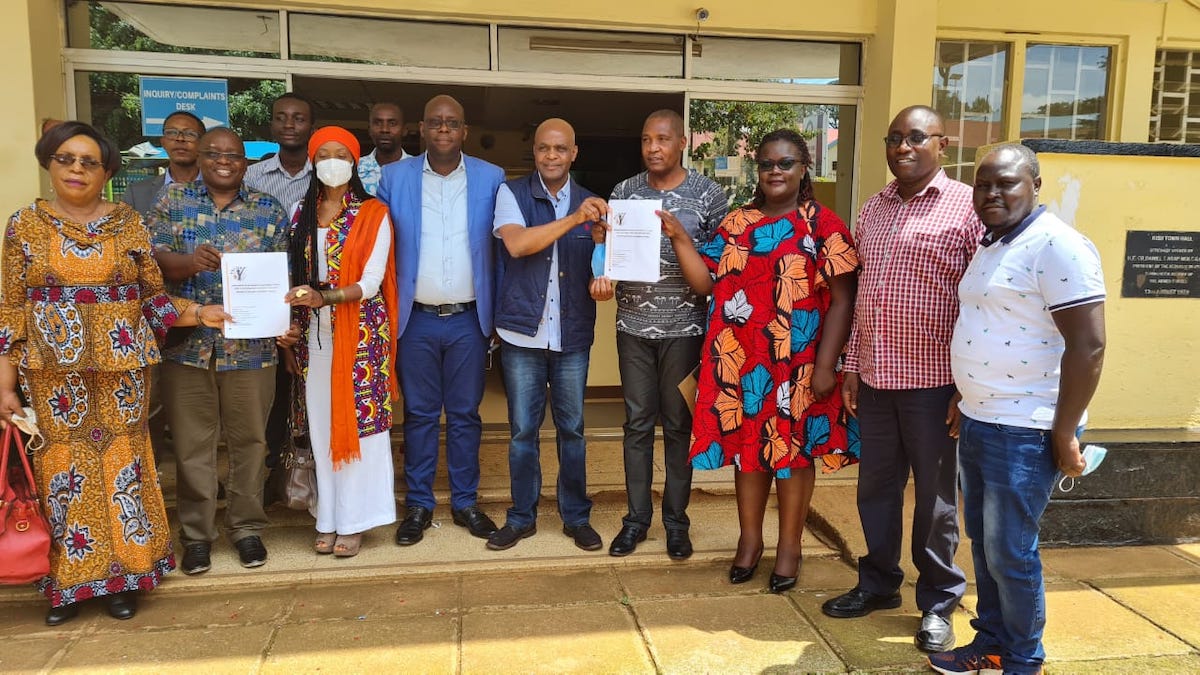
Kisii County Task Force Members and KNHRC Leadership handing over their submission/report to county leadership – March 02. 2022
A 2014 study by the Malindi District Cultural Association (MADCA) found that an average of 40 older persons are murdered every month in Kilifi County. The situation has gotten worse, and it has become increasingly difficult to conduct more research on this matter because the local administration have long declined to grant permission to interested parties to collect data. There is hope though because recent reports indicate that 3 older persons are killed every day in Kilifi county – many after being accused of being witches.
It was painful to witness that old women in Kilifi dye their hair black, so that they are not accused of being witches. Apparently, the belief amongst some young people is that having grey hair is a sign that one is a witch. It is the reason why our partners at MADCA came up with a slogans and hashtags:
- Uzee Sio Uchawi (Old age is not witchcraft)
- Mvi Sio Uchawi (Grey hair is not witchcraft)
Some Religious Leaders Fuel the Violence and Killings
My preliminary research on the beginnings of some of the thinking behind these lynching points to colonial origins that are also perpetuated by some people within the Christian religious community – especially evangelicals. The beliefs in witchcraft, subsequent conflict, religious healings, violence and killings are not unique to Gusii and Kilifi County. They happen in other parts of the coastal, eastern, central, and western regions of Kenya, as well as other African Countries such as Ghana, Tanzania, Zambia, Zimbabwe, Cameroon, Nigeria, The Gambia, Senegal, Democratic Republic of Congo (DRC), Republic of Côted’Ivoire, Chad, Malawi, Uganda, South Africa, Mali, Niger, Rwanda, Burundi, and others.
In countries such as DRC and Nigeria, children are also accused of being witches and maimed, ostracised, and even killed in some instances. The article shared shows the gravity of the problem when some religious leaders step in to add fuel and fan an already raging “fire” for personal gain:
“Added into an already rich mix of culture and tradition is the rise of Christian preachers, particularly from charismatic and Pentecostal churches. Some of these have reinforced popular beliefs while whipping up emotions and charging families for the exorcism of their children, turning the suffering of children into a lucrative business”.
Gaelle Bausson, UNICEF West and Central Africa Regional Office (2010).
Leo Igwe reinforces and affirms the role some religious leaders and other spiritual leaders and practitioners play in perpetuating the beliefs and subsequent violence, persecution, and killing of old people on allegations of practicing witchcraft. We grateful to the religious leaders such as Bishop Dr. John Warari Wakabu of the Inter Religious Council of Kenya, Assistant Bishop, Rev. Joseph Ole Momposhi of the Evangelical Lutheran Church of Kenya, Transmara, Narok, and Fr. Rev. Cornell Omondi of the Ethel Foundation for their work to help bring awareness and social change on the violence and killings of older persons in some of our communities.
Efforts to address the violence and killings: The Utu Coalition
When I learned of the lynching of Nyang’ate, Sigara, Sindege, and Moraa in October 2021, I reached out to and helped convene leading civil society, human rights organisational leaders as well as county, national level, and independent governmental agencies, and individual activists to give a very strong humanitarian, legal, and advocacy response for the attainment of justice, accountability, and enablement of sustainable social change. We say, enough is enough!
This coming together birthed the Utu Coalition which comprises of over 35 civil society and human rights organisations and several individuals/activists in Kenya and other places who seek to address the rampant violence and killings of older persons – especially women – following accusations of practicing witchcraft.
Among other things, we worked hard to ensure that the women who were murdered in Marani were given a dignified burial, the most vulnerable family member’s safety concerns were addressed, they had food, etc. We are grateful for the work Hellen Kiriama chairperson of the Tabaka Ward Uongozi Wa Utu community-based organization, Rev. Joseph Ole Momposhi, and Mariga Okemwa, Esnah’s Nyaramba and others who continue to support this important cause at the grassroots level.
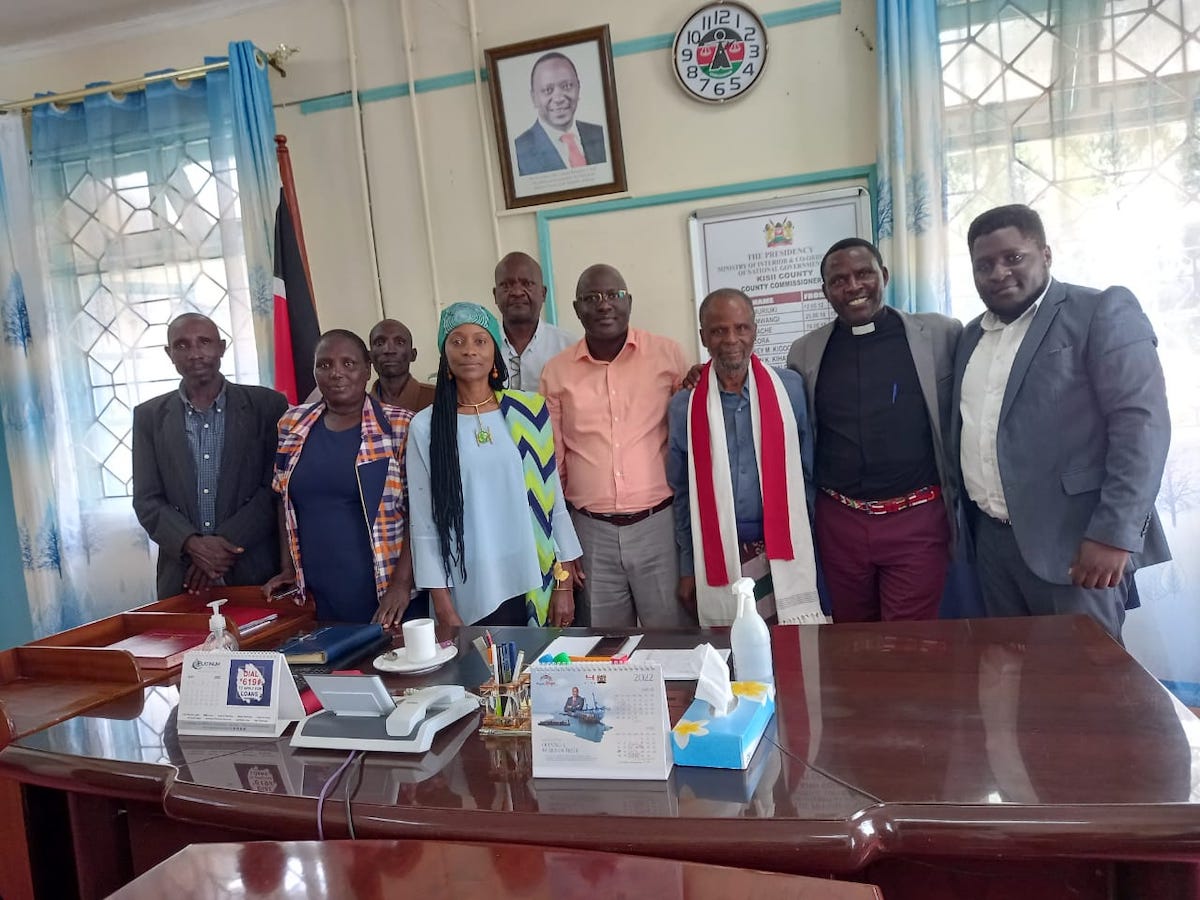
We are also grateful to Hon. Catherine Nyamato, former nominated Member of Parliament who continues to be the sole, vocal, and visible political leader from Gusii who is speaking out against these atrocities in Gusii. We welcome and appreciate the solidarity of former 2022 Presidential Aspirant Reuben Kigame who recently joined the Utu Coalition and participated in the recent UN Older Person’s Day commemoration in Marani, Kisii County. We need all voices – especially leaders – on board to stand up for humanity rights, dignity, and life.
Restoring victims and survivors’ dignity
When people are killed under such circumstances in places like as Gusii, their families are shamed, stigmatised, isolated and often violently driven away from their homes and prevented from burying their dead. The Utu Coalition stepped in last October and ensured that this did not happen to Nyang’ate’s, Sigara’s, Sindege’s, and Moraa’s families. We worked closely with the county government and got the Deputy Governor to attend the burial ceremony that was a public event covered widely by the media.
Hostile community went from saying these women were evil witches to saying, “they were buried like heroes”. We succeeded in initiating a shift in the narrative in the community and restored the dignity of the victims and their families – in the eyes of the community. Our early interventions through a national press conference also contributed to the creation of a Task Force by the former Kisii County Governor, James Ongwae after consultations with civil society leader George Kegoro.
I was among 2 others, Hon. Catherine Nyamato and Haron Ndubi who served as members of that Kisii County Task Force, representing civil society. Unfortunately, it turned out that the leadership of the previous administration at Kisii County did not take this matter seriously enough to ensure that this Task Force was adequately supported to complete its work. Therefore, no report was produced from this exercise to benefit the people of Kisii County and lay a strong foundation for social change.
We are hopeful that the new Governor, H.E., Hon. Simba Arati will take up this matter with urgency. He expressed interest in this issue, offered the Utu Coalition some support while he was on the campaign trail, and pledged to intervene to address this issue – if elected to office. We look forward to taking him up on this matter soon now that he has formed his government in Kisii county. This will be very important since the national government has already promised to work with the local communities in Kisii to help address this issue as emphasised during the recent commemoration of the UN International Day of Older Persons which was held in Marani Kisii to highlight this issue as well as remember the four women from this community who were murder last October. We thank the Directorate of Social Protection and partners such as Ageing Concern, HelpAge International, La Vie Foundation, KARIKA, and others who work for the welfare of the Elderly and Ageing Persons in Kenya and continue to stand in solidarity with the Gusii and Kilifi communities.
A quest for justice and accountability
The Utu Coalition and partners – including some government agencies continue to work hard to ensure justice for the victims. We raised funds and recruited the best lawyers such as Senior Counsel John Khaminwa, Haron Ndubi and others to represent the interests of the victims and their families. Other organizations and agencies such as the Kenya National Commission on Human Rights, FIDA-Kenya, the Kenya Human Rights Commission, commissioned lawyers to watch brief on their behalf on this matter. The case of the four women is being heard in the Kisii High Court and resumes, tomorrow October, 18, 2022 where about 13 suspects have been charged with the murders of Nyang’ate, Sigara, Sindege, and Moraa. We are also grateful for the support of our partners at Urgent Action Fund Africa and Womankind Worldwide, HelpAge International, and others for their support.
Connecting the struggle from Kisii to Kilifi and other places
The Utu Coalition seeks to connect the struggles for justice for victims and is working towards long term interventions through advocacy and other methods to enable transformative change. We continue to work closely with our partners at the Malindi District Cultural Association (MADCA) in Malindi who have been working alone for almost 20 years to protect older persons who are being killed at a very alarming rate. They stood in solidarity with us in Kisii during one of the case hearings in court.