
Business
Checking the facts of the six African cities on the Global Liveability Index
Recently, the Economist Intelligence Unit published its Global Liveability Index, rating the 10 most liveable and least liveable cities around the world. Of the 10 least liveable cities, six are in Africa. This finding has generated debate. Patrick Egwu takes a look at the realities on the ground.

The history
In 2004, the Economist Intelligence Unit (EIU) began a global ratings index by ranking 140 urban city centres in terms of their liveability, taking a range of factors into account. They called it the Global Liveability Index. The EIU’s methodology assesses locations around the world which provide the best or the worst living conditions. Every city is assigned a rating of relative comfort for more than 30 qualitative and quantitative factors across five broad categories: stability (focusing on issues such as crime, conflict and terrorism), healthcare, culture and environment, education and infrastructure.
For the first time, Austria’s capital, Vienna, was ranked the most liveable city in the world. Melbourne, Australia, which had been ranked the world’s most liveable city for seven years in a row since 2011, came in at second place.
However, despite the supposedly standardised rankings, the list has divided opinion. It has been criticised by many, especially critics in Africa, for not being accurate and impartial and for lacking objectivity. Others argue that the six African cities listed are indeed plagued by infrastructural challenges, political instability, crime and rot in the health sector, among other ills.
This is Africa takes a look at the African cities listed in the survey and considers the realities on the ground.
Lagos, Nigeria
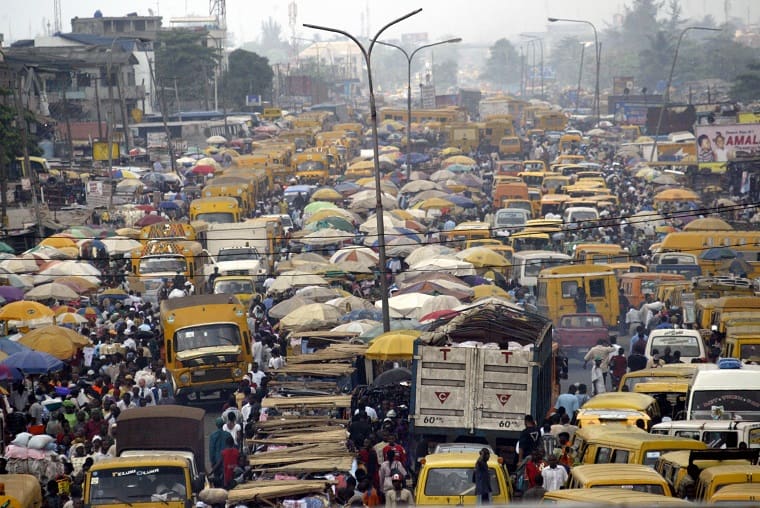
Of the six African cities on the “least liveable” list, Lagos, Nigeria’s commercial hub and arguably the most populous city in Africa, ranked third. Until 1991, Lagos was the capital of Nigeria, before it was moved to Abuja. still home toe
In the report, Lagos scored 37,5 percent and 33,3 percent for healthcare and education, 53,5 percent for culture and environment, and 46,4 percent for infrastructure.
The only cities that scored lower than Lagos were Syria and Bangladesh. The report also noted that the unavailability of adequate infrastructure and conflict, among other factors, were responsible for many of the lowest scores, adding that stability indicators have the highest single scores.

Slum at Lagos coast. Photo: Heinrich-Böll-Stiftung/Flickr
Officials and residents in the city, however, have voiced their disagreement with the ranking.
“I don’t totally agree with their report,” said Victor Igiri, a poet and resident of Lagos. “Though densely populated as a city, with many stressors that Lagosians have to negotiate every single day, such as the daily challenge of heavy traffic on our roads, Lagos is still a beautiful city,” he told This is Africa.
There were areas where he was in agreement with the survey: “Many of us are used to the bad roads, poor living conditions, environmental pollution, lack of a reliable power supply, insecurity of lives and property, and the unequal distribution of resources,” Igiri said. “In some parts of Lagos, many people have their homes under bridges, and the majority of the fortunate ones live in overstressed houses. There is also great marginalisation when it comes to income distribution.”
“But we are a happy people. We aren’t even complaining because we have grown a thick skin to absorb our many challenges,” Igiri added.
On the bright side, the quality of education in the city is increasing significantly, with more than 85% of the population being literate. The city also boasts many universities, institutes and learning centres and has been described as one of the fastest growing cities in the world.
The city has a rich cultural heritage, as evidenced by the many festivals, for example. When French president Emmanuel Macron visited Nigeria and the city a month ago, he was hosted to a night of glamour at the New Afrika Shrine, one of the city’s prominent cultural sites.
Harare, Zimbabwe
Political and economic instability in Harare last year might have been the reason for that city being ranked sixth in the survey. Last year, former president Robert Mugabe’s insistence on not handing over power to allow for a smooth democratic process sparked tension and violence in the city, with soldiers taking over in a coup, which not a coup.
In November 2017, Mugabe became an isolated figure, without the support he had always enjoyed. Calling for his resignation, hundreds of thousands of protesters took to the street of Harare to demand that he step down. Even his own party, the Zimbabwe African National Union (Zanu-PF), which had been standing behind him all along, sacked him from the party and joined in urging him to step down.

Harare CBD. Photo: Arthur Chatora
“The country was in crisis then and everything was in a shambles – even now,” said Paul Tachiga, a resident of Harare. “Harare is at the receiving end. Even though we have a new leader now, all is still not well,” he said.
In July this year, after an election considered by foreign observers to be “relatively peaceful,” the country elected Emmerson Mnangagwa. Analysts believe Mnangagwa, who hopes to attract foreign aid, faces a tough task to fix a broken economy following decades of misrule by Mugabe.
Western governments had said that a free and fair election was a precondition for the possible resumption of desperately sought loans from the International Monetary Fund, the World Bank and other international creditors.
In the decades of Zanu-PF rule, tourism became one of several important industries that collapsed. Air Zimbabwe shrunk from being an international carrier to a tiny network using elderly jet aircraft. Most of the nation’s tourist industry is concentrated in the area of Victoria Falls, on the Zambian border.
The National Gallery of Zimbabwe is one of the many cultural sites in the country. It houses not only a valuable and interesting national collection but also hosts travelling international exhibitions and has a permanent display of outstanding Shona soft-stone carvings.
“I don’t doubt the survey one bit,” said Tachiga, referring to the Global Liveability Index. “The failing economy and political crises of last year are the reasons for this.”
Tripoli, Libya
Libya has been enmeshed in crises and pockets of attacks on foreigners since the fall of Muammar Gaddafi, who was toppled by an internationally backed coalition in 2012. Terrorists and Islamist groups such as ISIS and Al-Qaeda are fighting for control over the heart of the city – with the present government unable to halt attacks and return the country to its former status.
With the continued presence of militia in Tripoli, which is ranked 7th in the survey, political contestation is at the highest level. Ethnic tensions and clashes between rival groupings, which has resulted in instability, are frequently reported.
The EIU report said that “conflict will not just cause disruption in its own right, it will also damage infrastructure, overburden hospitals and undermine the availability of goods, services and recreational activities”.

However, a recent investigation by CNN uncovered a modern-day slave trade where migrants intending to seek refuge in Europe were being sold for as little as US$400. This might have contributed to the city’s ranking.
A travel website offering country and city guides to expatriates said there is infrastructural decay in most parts of the country.
“Driving standards in Libya are poor and the country has a high traffic accident rate. The situation is exacerbated by lax enforcement of traffic laws and poor road conditions, particularly outside of main cities and towns, and poorly maintained vehicles. The threat of accidents increases further at night and during sandstorms, when visibility is greatly reduced.”
Tripoli has many international schools, with the largest and famous being the University of Tripoli, which offers free tuition to the citizens.
Algiers, Algeria
The Arab Spring, which swept across the Middle East and North Africa, greatly affected events in those countries. During the wave of revolutions in North Africa, Egypt, Libya and Algeria experienced mass protests and demonstrations. However, while the protesters toppled governments in Egypt and Libya, Algeria managed to resist.
Experts in the region believe that the country managed to avert the revolution by redistributing its substantial oil revenues but also noted that this cannot be sustained indefinitely and could escalate the economic and political resentments in the country.
Algiers has also been marred by violence in the past decade: A civil war, which started in 1991, destroyed much of the infrastructure in the country. In recent times, things in Algiers have returned to normal. Substantial reconstruction of the infrastructure has taken place and is still ongoing.
Despite the relative growth and development, a low-level Islamist insurgency and political and economic instability still affect the country. A report by the Oxford Business Group stated: “As a key industry for Algeria’s economic development and diversification, the construction sector’s growth forecast remains positive, despite the slowdown of the wider economy. There are major projects in transport and housing in the pipeline, though a flatter rate of expansion is due to investment cutbacks, and the buoyant curve of the sector’s inflow throughout 2012-16 has begun to dip.”
“Population growth and rapid urbanisation have seen the government draw on public investment to meet rising housing demands. The ever-growing inflow from the countryside to urban areas is a challenge that the government addresses through subsidised housing provision,” the group said further.
The literacy level in Algeria, and Algiers specifically, is high, at more than 80%, and there are many learning centres. About 15% of the country’s annual budget is devoted to education.
Similarly, Algiers has many cultural attractions and museums, serving and providing for the tourism potential of the country. Interesting sights are concentrated in the old part of the city, known as the Casbah or Medina.
Douala, Cameroon
Douala, the capital city of Cameroon, is at number eight in the EIU survey. There is a tense atmosphere in the city; a form of political instability that sees armed secessionist groups often clashing with government forces. In recent months, there have been multiple exchanges of fire between security forces a