
Culture
Could we go from cancel culture to dreaming together?
While commonly viewed as a damaging form of contemporary left-wing politics, cancel culture is a symptom of a much deeper problem: the rapid erosion of our lives by computational capitalism.

In mid-2020, fuelled by grief and rage at the police murder of George Floyd, Nathan Jun wrote on a friend’s Facebook page that he wanted “the entire world to burn until the last cop is strangled with the intestines of the last capitalist, who is strangled in turn with the intestines of the last politician”, a variation of the famous Jean Meslier cry that “men will never be free until the last king is strangled with the entrails of the last priest”.
Jun, an anti-fascist activist who at the time was a highly regarded professor of philosophy at Midwestern State University in Texas, United States, offers a harrowing account of what ensued once right-wing groups circulated his post.
Jun faced a relentless barrage of death threats and had his home address made public. Menacing strangers graffitied his house with antisemitic slogans and would park outside for hours. His university was initially supportive, but it soon adopted a punitive approach that forced Jun, who was under severe mental distress, to resign.
Since then, he has been hospitalised three times for post-traumatic stress disorder and struggled to rebuild a life he regards as ruined by the incident. Meanwhile, his profile has been added to right-wing website Professor Watchlist, where in McCarthyist fashion he joins “radical” academics like Angela Davis, Robin DG Kelley and Cornel West as a dangerous communist threat to the minds of young Americans.
RELATED ARTICLE:

While Jun’s nightmarish experience clearly meets all the criteria for “being cancelled”, his case has attracted little attention relative to those of “grievance studies” hoaxer Peter Boghossian and anti-trans crusader Kathleen Stock. This is perhaps in part because cancel culture is commonly viewed as a tactic associated with Left or progressive political values.
But Jun’s case – like those in which Art Spiegelman’s Maus comic about the Holocaust was banned and anti-LGBTQIA+ conservatives burned books – gives the lie to the idea that cancellation is a broadly Left phenomenon.
This is echoed by the myriad critiques of the more toxic elements of cancel culture – as well as the practice of wokewashing whereby brands use social issues superficially for profit – that have emerged within Left or radical circles in recent years. Author and abolitionist activist adrienne maree brown’s We Will Not Cancel Us is a call to practise restorative justice aimed at collective liberation instead of the carceral, punitive logic of laws, states and prisons.
But if we see cancel culture as a phenomenon that stretches across the political terrain and is employed by everyone from anarchists to the far Right, what exactly do we seek to describe with the term?
Antisocial media
In many cases, calls to cancel someone or something are essentially advocating for a cultural boycott. It is a long-standing political tactic that is currently being employed against Spotify for its facilitation of the spread of Joe Rogan’s specious views.
Likewise, are the overlapping terms “wokeness” and “identity politics”, or the slur “social justice warrior”, all that novel?
To be woke originally just meant to be aware of issues of oppression and exploitation in society. Similarly, argued Left theorists Wu Ming recently, even right-wingers who “aren’t heirs to political traditions with established vocabularies” could be said to be seeking social justice, misguided and bigoted as their anger may appear.
Given the increasingly widespread use of these terms, however, and the fact that this maps closely to the growing prevalence of online life, it may be that people have something more novel in mind when they decry “cancel culture gone mad” or bemoan the “wokerati” destroying higher education. In this regard, it may be useful to move away from a near exclusive focus on the symptoms and grapple with the probable causes, beginning with the primary context in which discourses around identity, social inequality and power take place: the internet and, specifically, social media.
RELATED ARTICLE:

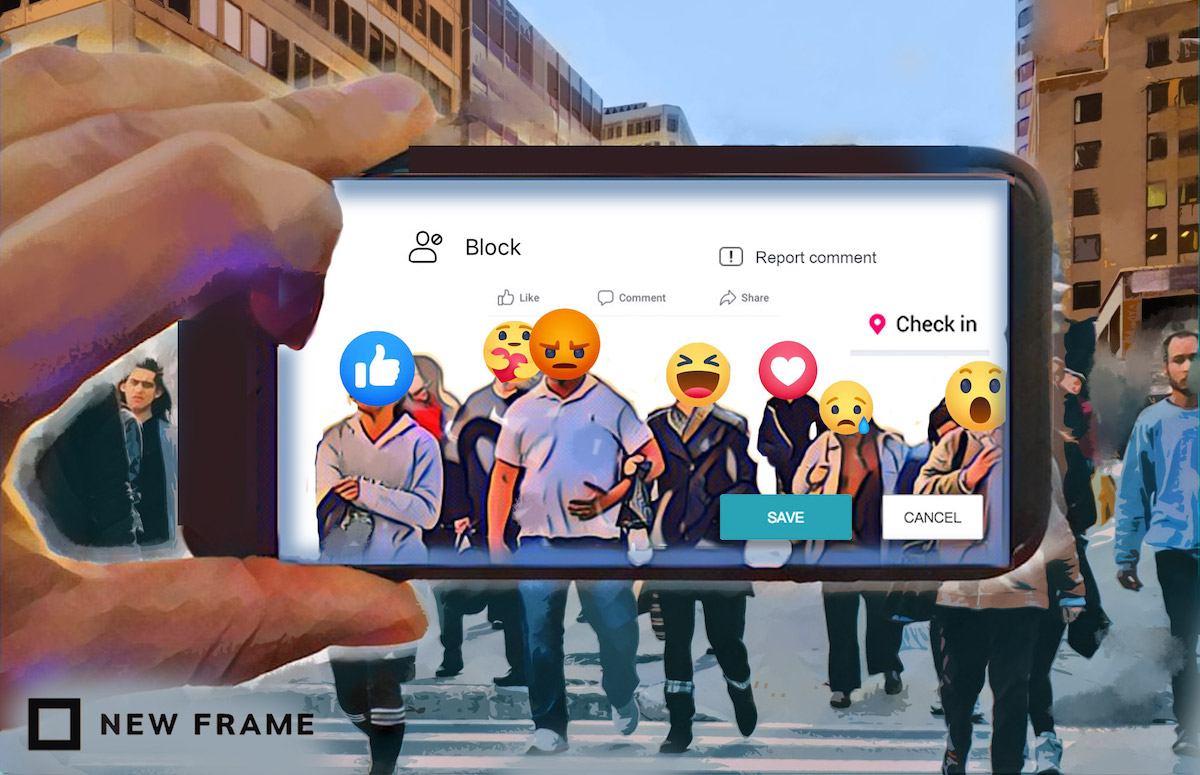
As media theorists have long pointed out, our social interactions tend to conform to the underlying mediums we use. Social media is a conversational context characterised by overexposure – the feeling that the whole world could be listening – and the reduction of affect to emoticons. It relies on the aggregation of sentiment, where the expression of views that diverge from the ever-shifting consensus is punctuated by cancellation anxiety. It’s easy to see how the limitations of this short-form, text-driven public medium that is devoid of the tone and nuance of face-to-face communication can rapidly lead to psychologically toxic outcomes.
Social media is near ubiquitous, especially among young people perceived as belonging to the cancel-culture generation. Given this, it is unsurprising that those seeking peer acceptance, whether in political circles, fan groups or on their private Instagram feed, adapt their behaviour in performative ways, joining circles of shame, aligning with dogmatically held and uninterrogated positions, without risking the injection of nuance into conversations, and reducing their emotional range to the affective minimum like, angry face, sad face.
Online behaviour tends to be unequivocal, sectarian and hyperbolic, rendering us ever more like the simplistic avatars that represent us. The overly binary and rigid tone of our virtual selves increasingly influence our offline interactions.
In this way, we can understand cancel culture as a generalisation of acceptable conduct in online spaces to the offline world. This creates a mismatch between the simplistic social participation that defines digital reality and the messiness of the real world. Appeals to anonymous administrators, banning, blocking or hiding views we don’t want to engage with and expressing group belonging through subscription, deletion and unfollowing are not useful ways to navigate offline social realities.
Our postmodern malaise
Research on the psychology of “extremely online people”, who tend to struggle with issues such as delayed gratification, ethical complexity and expressing nuanced emotions, supports this view. Such individuals tend to gravitate towards what Mark Fisher, author of the popular Capitalist Realism, describes as “depressive hedonia”: a constant, listless consumption of the low-level dopamine hits obtained from social media interactions.
This contemporary malaise includes antisocial phenomena such as trolling and “shitposting”, as well as the forms of cynical and nihilistic provocation that the late philosopher of technology Bernard Stiegler humorously referred to as je-m’en-foutisme, or I-don’t-give-a-fuckism – dangerous psychological coping mechanisms that mask the anxiety, dread and futility that stem from a deeply felt loss of meaning and direction in life.
In books like The Age of Disruption and The Neganthropocene, Stiegler is critical of what he calls “computational capitalism”, a destructive new force that he argues is rapidly changing how we relate to vital aspects of our self-understanding as meaning-making creatures.
This new form of capitalism operates via what he calls generalised proletarianism. Karl Marx famously drew attention to the ways that the development of industrial technologies under capitalism proletarianised workers by exploiting their labour. Stiegler, with reference to the Frankfurt School of philosophy, expands on this by observing that a second stage of proletarianisation – focused on aspects of life outside of the workplace – took place in the 20th century primarily through the popularisation of mass media such as radio, cinema and television. Today, he says, this is being followed by the proletarianisation of thought itself, through the algorithmic technologies that increasingly drive everything from social media and stock markets to predictive policing.
RELATED ARTICLE:

Proletarianisation, for Stiegler, has expanded from capturing our knowledge of how to live – think of the “lifestyles” promoted by advertisers – to replacing the creation of knowledge itself. This has transformed what it means to think, remember and hope for a future that is different from the present. This capturing of our knowledge, he says, is reflected in the automation of our selfhood and interpersonal relations in the service of the data economy. And this exploitation operates at the near infinite speeds of planetary computing and communications networks. It short-circuits our ability to produce new knowledge, interrupting knowledge-building processes such as critical reflection and decision-making.
Computational capitalism, Stiegler warns, “penetrates, invades, parasitises and ultimate