
Culture
Terry Hirst: the trailblazing Kenyan editorial cartoonist and comic author
The late Terry Hirst in conversation with Msanii Kimani wa Wanjiru.

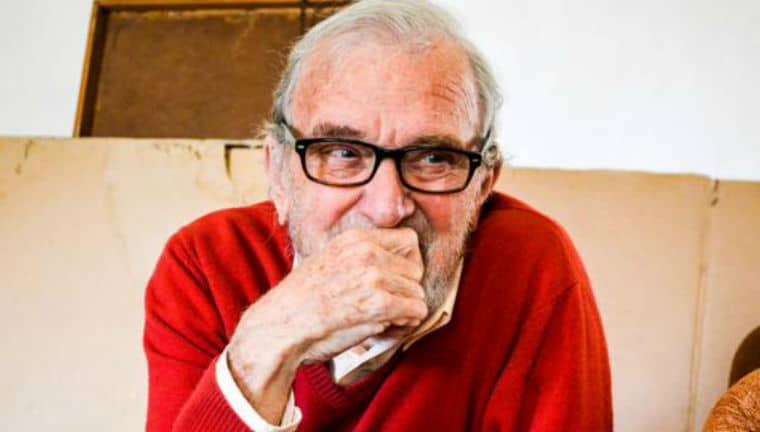
The late Terry Hirst was the pioneering editorial cartoonist and comic author in Kenya. He made his mark with his witty illustrations for the leading daily newspaper and touched young minds when he created the Pichadithi series. The series title was coined from two Swahili words Picha (pictures), (H)adithi (story) and was without doubt one of the longest published comic series that was also grounded in African traditional oral literature.
Msanii Kimani: What inspired you to pen the Pichadithi series?
Terry Hirst: It was in 1982, and Kenya had just gone through the trauma of the attempted coup d’état. Working in the mainstream media had become politically very repressive, and I had been forced out of my job as an editorial cartoonist on a national daily shortly before, and my re-appointment as a lecturer in graphics at the university failed to be confirmed in related circumstances. So, I was faced with the usual artist’s problem of how to make a living, which involves taking the products of an artist’s ‘gift economy’ and entering the market economy with them, and for this you really need a patron – or at least an agent.

Pichadithi series Adventures of the Hare
Would you describe it as more than a comic story series?
For me, with all my troubles, it certainly was – but it was all set in a much larger context. Put it this way: all of Kenya at that time had gone through a violent trauma, as well as the shortages of food, the ‘sunset rice’, the ‘karafu’ and coffee scandals, and the ‘crack-down’ after the coup attempt had been very hard and unrelenting. My wife, Nereas N’gendo, and I both felt that the country – particularly the children – needed ‘healing’, so we thought that traditional stories from all over the country that everyone could relate to culturally would not only soothe and entertain, but underline the unity of our diversity. Along with that, it also provided the opportunity to provide a well-researched material culture context for the stories that would not have to be explained – but simply ‘seen’ as the way people used to live their lives fully and sustainably. The first title was ‘Kenyatta’s Prophecy’, based upon a traditional story that the founding president had used to explain the struggle for Independence, and the sacrifices that had to be made in order to be where we were.
In the series you were quoted saying that “an important part of our African culture is in the traditional stories which have been handed down by word of mouth over the years.” Do you think this has been threatened by the new media?
The ‘oral culture’ is alive and well, and, in fact, the new media in the form of the reading of books re-invigorated it so that it was largely collected by scholars and shared with the new young and the general public. But, with the vast majority of Kenyans still without electricity, we must remember what Okot p’ Bitek told us, that while we talk about the new media and culture, ‘all over the countryside the fires are being lit, and the stories are being told’.
The new electronic media with its insatiable need for local ‘content’ can only re-inforce this trend – if our creative people are up to it, and recognize that we will always have the attraction of being ‘exotic’ in the international market if we resist the pull of the ‘flat-earthers’, and first build indigenous media markets, alongside the ‘mitumba’ entertainment products we all enjoy. There are ‘niche’ markets all over the world for authentic Kenyan, or East African, creative products, as the musicians are starting to prove.
I remember titles like Kenyatta Prophecy, The Greedy Hyena, Wanjiru the Sacrifice, The Amazing Abu Nuwasi, Lwanda Magere, The Ogre’s Daughter, The Adventures of Hare, The Wisdom of Koomenjoe, etc. How did you source these stories?
 You see, the ones that you remember include my original ten titles and the early ones of (Frank) Odoi and (Paul) Kalemba, before the artists lost control, and the marketers, reducing internal costs by cutting back on artist’s fees, turned the art products into ‘commodities’ rather than the artist’s ‘gifts’ that they were originally conceived as. But the actual sourcing of stories is not difficult; there are more than two thousand recorded traditional stories in Africa that are easily available! The difficult part is choosing a story that you believe your audience needed to hear, at that time, and shaping it for them so that it will resonate and have larger meaning, as well as entertain.
That’s what the stories were originally about – helping to shape a better you – not just for children, but also for adults. Many graphic artists, through the ages in a widespread tradition but especially after the industrial revolution and the introduction of market capitalism, have developed, along with the storytellers and the ‘singers of the songs’, a form of ‘social commissioning’ from the communities they live and work among, in tune with their local audiences, and responding to their immediate cares and worries. If local creative people do not do it, the international market will soon move in and take over, largely on the basis of ‘something to tell for something to sell’, and supply that human need to ‘hear the stories’.
Does that mean a comic book market especially in Africa is confined to traditional stories?
Not quite. A comic book market is by no means confined to traditional stories, of course. It is a vast and expanding field, as even a brief overview of global development of the comic book quickly reveals. I have written extensively about it elsewhere, and hope to set up a kind of ‘Sukumawikipedia’ about it in the near future, called ‘A Brave New Idea – Art for Ordinary Folks! An Overview of Caricaturists, Cartoonists, and Comic Artists, and the Modern Graphic Arts Tradition in the Globalization Process.’ This would enable young artists in our region to quickly see and understand – get the picture – of the universal culture of the medium, and the original social contribution they can individually and independently make by enhancing their own creative skills, and while – if they are any – sustaining themselves independently and wholesomely.

Omuganda’s Treasure
The comic book format, this unusual union of literature and art, words and pictures, has contributed a great deal to the social cohesion of those societies in which it has taken root. From the late 1880s it has happened in those societies experiencing the trauma of massive urban/rural migration, that crossover of life styles that has occurred all over the world in the last one hundred years. In fact, no successful industrialized market economy has emerged anywhere in the world, without spawning a comic book industry to assist in the necessary balancing of forces, and the necessary introduction and education of the young into that social process, so that they understand what is expected of them. It has happened in Europe and North America, of course, but also indigenously in China, Japan, and eventually in India, Central and South America, and the Mahgreb, but clearly not yet in Africa South of the Sahara, where in my view it is so obviously needed.
What prompted you to choose your career as a cartoonist?

Terry Hirst (1932–2015) Photo: Dreimalalles
An important influence must have been my morning and evening job as a newspaper delivery boy. Every day, for all the years I was in grammar school, I had a quick glance at all the national daily newspapers in England, and plunged into the graphic arts tradition of the editorial political cartoon, the comic strips and the ‘spot’ cartoons. I didn’t really understand what was happening, but from the 1940s to 1950, I came under the influence of powerful political cartoonists like Low, Zec, Shepard, Illingworth, Lancaster, Cummings, Giles and Vicky – from across the political spectrum, all shaping my thoughts and attitudes. But it still had not occurred to me to be a cartoonist – I wanted to be an artist.
You worked around the clock. How did this change?
It was hard work and then I got the chance to experience what Jomo Kenyatta had described as ‘the freedom that Europe has long forgotten.’ I was invited by the newly independent government in Kenya to head art teacher-training at the Kenyatta College. Kenya had no cadre of professionally trained art teachers for its expanding secondary schools, and the prospect was irresistible, along with the opportunity to set up an entirely new system of purposeful art teacher training, unlike the ‘farce’ of art school. Over the years it proved to be very creatively satisfying, with the first generation of students to graduate producing outstanding work that was featured in the internationally distributed ‘African Arts’ magazine.
Those were lively and very creative years in the country.
Creatively, Kenya was a very exciting place to be in 1965, and I soon made contact with the Chemchemi Arts Centre, that had opened up the art scene for the non-formally trained, and then the break-away Paa Ya Paa Art Gallery, where I met some of the most creative minds of the ‘independence’ generation. Elimo and Rebeka Njau, supported mainly by James Kangwana, the late Jonathan Kariara, Charles and Primila Lewis, and Hilary Ng’weno, had established the gallery and I was welcomed to join them, and stimulated to work. I eventually contributed two one-man exhibitions of paintings, which both sold out.
When did you make your foray into the local print media?
I had already started to draw as a freelance cartoonist for the ‘Daily Nation’, when Ng’weno invited me to illustrate his regular ‘With a Light Touch’ column, which proved to be very popular. Later, with my third teaching contract ending, Ng’weno and I started one of the first satirical magazines in Africa, called ‘JOE’, after a character in the column. It was an immediate success, and quickly built circulation at home and abroad, but after a year or so, Ng’weno went on to start his prestigious ‘Weekly Review’. Nereas had joined us at ‘JOE’, after leaving Oxford University Press, and we ran the magazine together for the next ten years. I had also been invited to be the first editorial cartoonist in the ‘Daily Nation’, and these years, despite the increasing political repression, were among the happiest, creatively, of my life. At last, I had found ‘the freedoms that Europe had long forgotten’, without becoming a ‘commercial artist’, and doing what I wanted to do from inner necessity. As the ‘free press’ came under increasing pressure from political patronage and ‘correctness’, the space in the media environment for pluralist thinking of this sort shrank, and I fell into deep depression, and ‘JOE’ had to finally close its doors.

Adventures of Hare– excerpts
<