
Politics & Society
Long Read: Beyond the binary — Reimagining democracy through ancient African wisdom; The lens of Utu/Ubuntu
On February 28, 2026, the US and Israel launched airstrikes on Iran, assassinating Supreme Leader Khamenei. Iran retaliated with missiles, closed the Strait of Hormuz, and triggered the worst oil shock in history. Two months on, thousands are dead, the fragile ceasefire is collapsing and global growth forecasts slashed. The conflict exposes a deeper trap: Washington’s performative democracy and Tehran’s clerical dictatorship have forced the public into binary loyalty tests. Utu philosophy however rejects the script: condemn the slaughter and the theocratic failures without apology. The world isn’t choosing freedom vs. tyranny—it’s choosing rival flavours of top-down control.

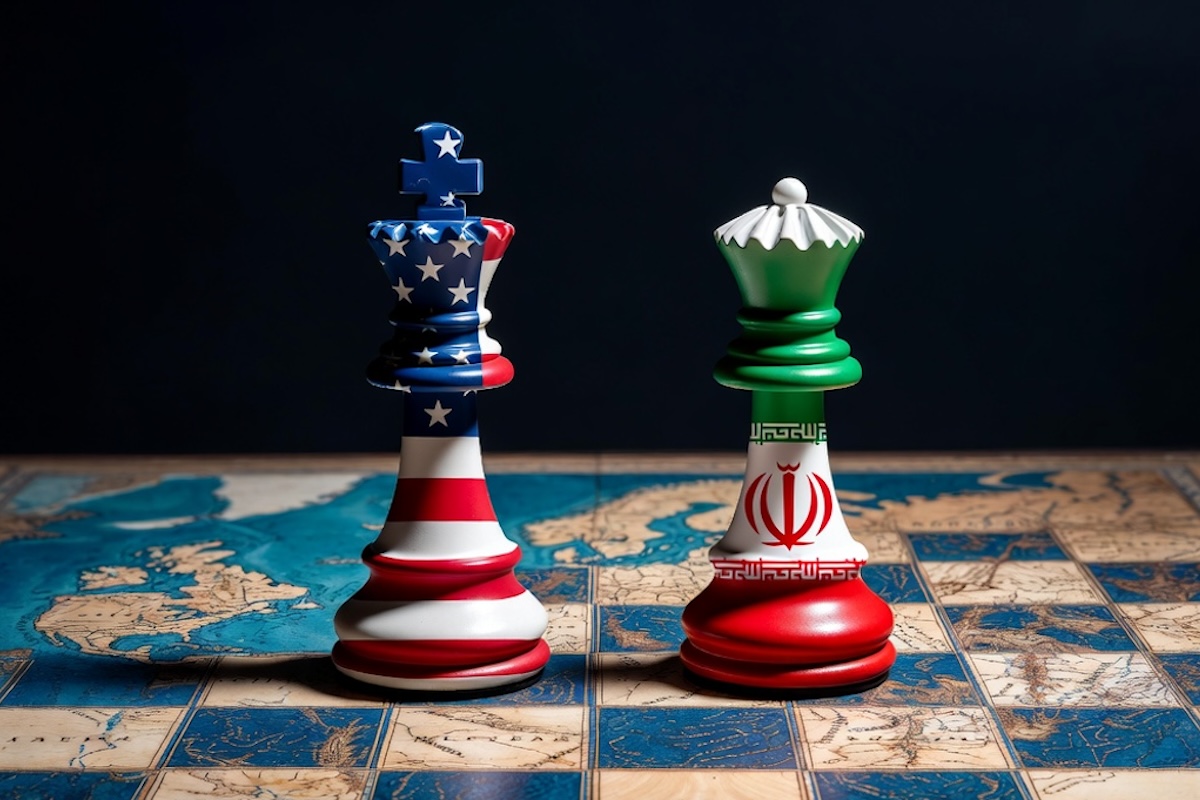
Prologue: The War That Killed the Lie
On February 28, 2026, the United States and Israel launched coordinated airstrikes against Iran, assassinating Supreme Leader Ali Khamenei on the first day of the campaign. The strikes were launched during active diplomatic negotiations between the two countries. There was no formal congressional declaration of war. The United Nations Security Council was bypassed. The International Court of Justice was ignored. Iran retaliated with hundreds of ballistic missiles and drones targeting Israel, US military bases across Bahrain, Jordan, Kuwait, Qatar, Saudi Arabia, and the UAE, and closed the Strait of Hormuz — through which approximately twenty per cent of the world’s oil supply normally passes. The International Energy Agency described what followed as the largest supply disruption in the history of the global oil market.
As of the writing of this article in April 2026, day forty-seven of the conflict, more than 4,000 people are dead across the region, overwhelmingly in Iran and Lebanon. A fragile two-week ceasefire brokered by Pakistan on April 7-8 collapsed almost immediately: Iran refusing to fully reopen Hormuz while Israel continued strikes on Lebanon, Netanyahu explicitly excluding Hezbollah from the ceasefire terms. After the Islamabad talks failed without a deal, Trump declared he no longer cared about negotiations and announced a naval blockade of all Iranian ports on April 13. Oil has crossed $100 a barrel. The IMF has slashed global growth forecasts. Pakistan’s military chief is currently in Tehran, attempting to broker a second round of talks before the ceasefire expires on April 21.
The world is watching a live demonstration of everything this article argues.
Here was the self-proclaimed citadel of liberal democracy — a nation that lectures the world about elections, rights, and the rules-based international order — launching a sustained military campaign against a sovereign state without a formal congressional declaration of war, in direct defiance of international law, with its corporate media functioning less as a free press and more as an embedded propaganda architecture. And the citizens whose taxes funded the campaign were given a binary choice: support the war or be branded as sympathizers of theocracy.
And yet the critics of Western aggression found themselves trapped in the same mirror logic — forced to either defend Iran’s theocratic governance structure or be conscripted into the war party’s framing. As if the only legitimate response to bombing a country is to pretend its government has no structural problems.
UTU refuses this trap. UTU says: we can hold both truths simultaneously. We can condemn the annihilation of a people and name the governance failures that have historically denied those same people their agency. We can critique Washington’s performative democracy and Beijing’s managed consensus and Tehran’s clerical gatekeeping — not because they are equivalent, but because all three systems share the same foundational flaw: the structural subordination of grassroots agency to the interests of a self-perpetuating elite.
The world is not choosing between freedom and authoritarianism. The world is choosing between different architectures of elite control. And the sooner we name that, the sooner we can build something genuinely different.
The Exhausted Binary
For decades, the global geopolitical discourse has been trapped in a suffocating, hypocritical binary. We are told we must choose between Western liberal democracy — a system increasingly captured by corporate oligarchy, settler-colonial violence, and algorithmic polarization — and highly centralized autocracies that deliver material efficiency at the absolute expense of individual agency.
This ‘with us or against us’ paradigm is not merely exhausted. It is actively dangerous. Because embedded within it is the assumption that the West’s political architecture is the ceiling of human possibility, and that every deviation from it — however materially effective, however culturally rooted, however democratically legitimate in its own context — is a pathology to be cured, sanctioned, or bombed into compliance.
It is time to evaluate global governance not through the performative metrics of Western electoralism, but through the fundamental purpose of a state: to serve the collective well-being, dignity, and shared agency of its people.
To break this deadlock, we must examine the world’s major political systems through the philosophy of UTU — the recognition of our shared, inescapable interconnectedness. “Mtu ni Watu”. “Umuntu ngumuntu ngabantu” — A person is a person through other persons. UTU holds that a society can flourish only when grassroots agency directly shapes the leadership’s mandate. When we apply this lens to the United States, Iran, and China, the structural flaws of all three become glaringly obvious. More importantly, it reveals exactly how we can upgrade them.
But first: we must name the third reality that both the Western and Eastern poles have spent decades trying to erase.
The Erased Pole: The Global South and Non-Alignment 2.0
The binary was always a lie constructed by and for the powerful. It systematically erased the political reality of the majority of humanity — the nations of Africa, Latin America, Southeast Asia, and the broader Global South, who have spent centuries navigating between empire and empire, developing their own governance philosophies, and paying in blood for the privilege of being treated as a theater for other people’s ideological contests.
The response of the Global South to the US-Israeli war on Iran has been revelatory — but not in the way that optimistic non-alignment theory might have predicted. The dominant posture has been, for the most part, strategic and careful silence. And that silence speaks louder than any declaration.
BRICS, under Indian leadership in 2026, did not issue a unified condemnation of the strikes. Brazil and China condemned the attacks as violations of Iranian sovereignty. India, whose Prime Minister Modi had addressed the Israeli Knesset just three days before the war began, said nothing. South Africa, with its decades-long ties to Iran and its outspoken role in the Gaza genocide case at the International Court of Justice, issued only a muted statement noting that ‘anticipatory self-defense is not permitted under international law’ — careful, lawyerly, and deliberately non-committal about Washington’s role. The African Union called for de-escalation. Continent after continent chose the language of mediation over the language of solidarity.
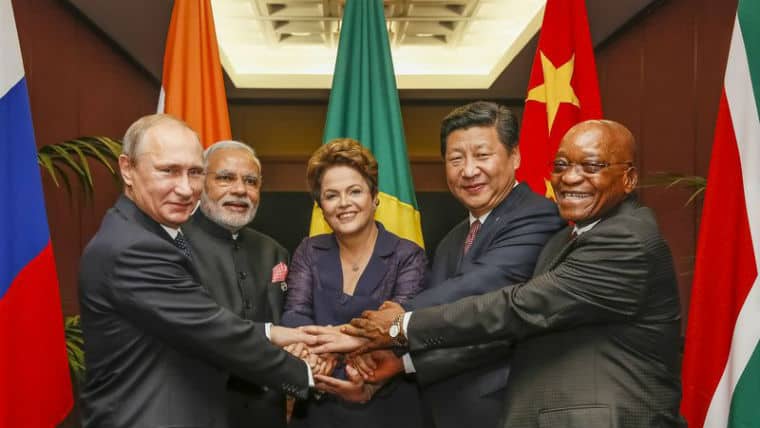
BRICS, Photo: Wikimedia Commons
The Western analytical class was quick to declare this proof of BRICS incoherence. But this reading mistakes strategic calculation for weakness. African and Global South governments, already facing the economic fallout of Hormuz disruption in fuel prices, fertilizer costs, and food inflation devastating their populations, were performing a precise calculation: how to name the illegality of the war without triggering the kind of Washington retaliation that would make their economic crises worse. That is not neutrality. That is the compelled pragmatism of nations that have spent a century learning what happens when you challenge imperial power directly without the material capacity to absorb the consequences.
The more structurally significant response has been quieter and more durable: the acceleration of de-dollarization frameworks, the deepening of South-South trade corridors, and the strengthening of yuan-denominated settlement systems. Iran’s acceptance of Chinese yuan payments for Hormuz transit fees during the closure — assessed by the Iranian Revolutionary Guards in yuan, not dollars — is a small but structurally significant detail. The financial architecture of the post-unipolar world is being built in the margins of the crisis, not in its headlines.
UTU lives here. It has always lived here. The communal governance philosophies of the African continent, the buen vivir frameworks of Indigenous Latin America, the musyawarah mufakat consensus traditions of Southeast Asia — these are not romantic anthropological artefacts. They are sophisticated, battle-tested governance technologies that the binary dismissed as primitive precisely because they threaten its monopoly on political imagination.
The honest UTU analysis of the Global South’s response to this war must hold two things simultaneously: the legitimate strategic reasons for restraint, and the urgent need to build the institutional architecture that makes genuine solidarity materially possible rather than politically suicidal. A Global South that can only express solidarity in whispers because its food security depends on not angering Washington has not yet built the material basis for the sovereignty it philosophically asserts. That building is the work. The collapse of US-led unipolarity is not a crisis to be mourned. It is an opening — but openings require organized people ready to walk through them.
The Illusion of Choice: The U.S. and Iran
Both the United States and the Islamic Republic of Iran claim to derive their power from the people, yet both rely on specialized gatekeepers to contain the popular will.
The United States: The Democratic Legitimacy Crisis
The US Electoral College has always diluted popular sovereignty through geography and partisan capture. The ‘winner-take-all’ mathematical architecture erases the voices of millions of minority voters within individual states, elevates leaders rejected by the national majority, and leaves working-class communities structurally disenfranchised. But the war on Iran has accelerated a deeper legitimacy collapse that no electoral reform alone can address.
When an executive branch can prosecute a multi-theater military campaign without a formal declaration of war; when a legislature is so comprehensively captured by donor interests that it functions as an appendage of foreign policy lobbies rather than a representative of the American people; when the fourth estate has been so thoroughly absorbed into the military-industrial-media complex that dissenting voices are algorithmically suppressed and mainstream anchors recycle Pentagon briefings as independent analysis — at that point, the formal architecture of democracy has become a performance staged for domestic consumption and international export, while the actual governance happens in boardrooms, think tanks, and bilateral security agreements.
The American people did not vote for this war. They were not consulted. They were managed. This is not a malfunction of American democracy. It is its current operating logic.
Iran: Governance, Sovereignty, and the Distinction That Must Be Made
We must be precise here, because imprecision serves the war party. Critiquing the structural failures of the Islamic Republic’s governance is not the same as endorsing its military destruction. These are not just different positions — they are morally incompatible with each other only in the binary’s logic, not in the logic of UTU.
The UTU critique of Iran remains structurally valid: the permanent clerical architecture — the Assembly of Experts selecting the Supreme Leader, every candidate pre-vetted by the Guardian Council — creates an impenetrable closed loop that preemptively strips the grassroots of their agency. Secular workers, reformists, women’s rights organizers, and independent civil society actors cannot legally challenge the state’s supreme mandate. The 2022 Mahsa Amini uprising and the brutal suppression that followed illustrated in blood exactly what happens when a governance system has no structural mechanism for the people to say no to power without becoming criminals. The 2025–2026 anti-government protests that began on 28 December 2025 illustrate a deepening crisis. The unrest followed a sharp depreciation of the Iranian rial, rising inflation, and widespread shortages linked to international sanctions and government mismanagement.
The assassination of Khamenei on the first day of the war has not resolved Iran’s structural problem — it has deepened it
The assassination of Khamenei on the first day of the war, and the succession of his son Mojtaba as Supreme Leader in the weeks that followed, has not resolved this structural problem — it has deepened it. A governance system now conducting a war for national survival, led by a figure whose legitimacy derives entirely from hereditary clerical succession rather than any popular mandate, is a system that has been handed the ultimate justification for the suppression of internal dissent. The Iranian people’s desire for governance reform has been, at least temporarily, overwhelmed by the Iranian people’s need for national survival. This is precisely what war does to the domestic reform project — it does not defeat it, it postpones it indefinitely, while simultaneously strengthening the hand of the most authoritarian elements within the system.
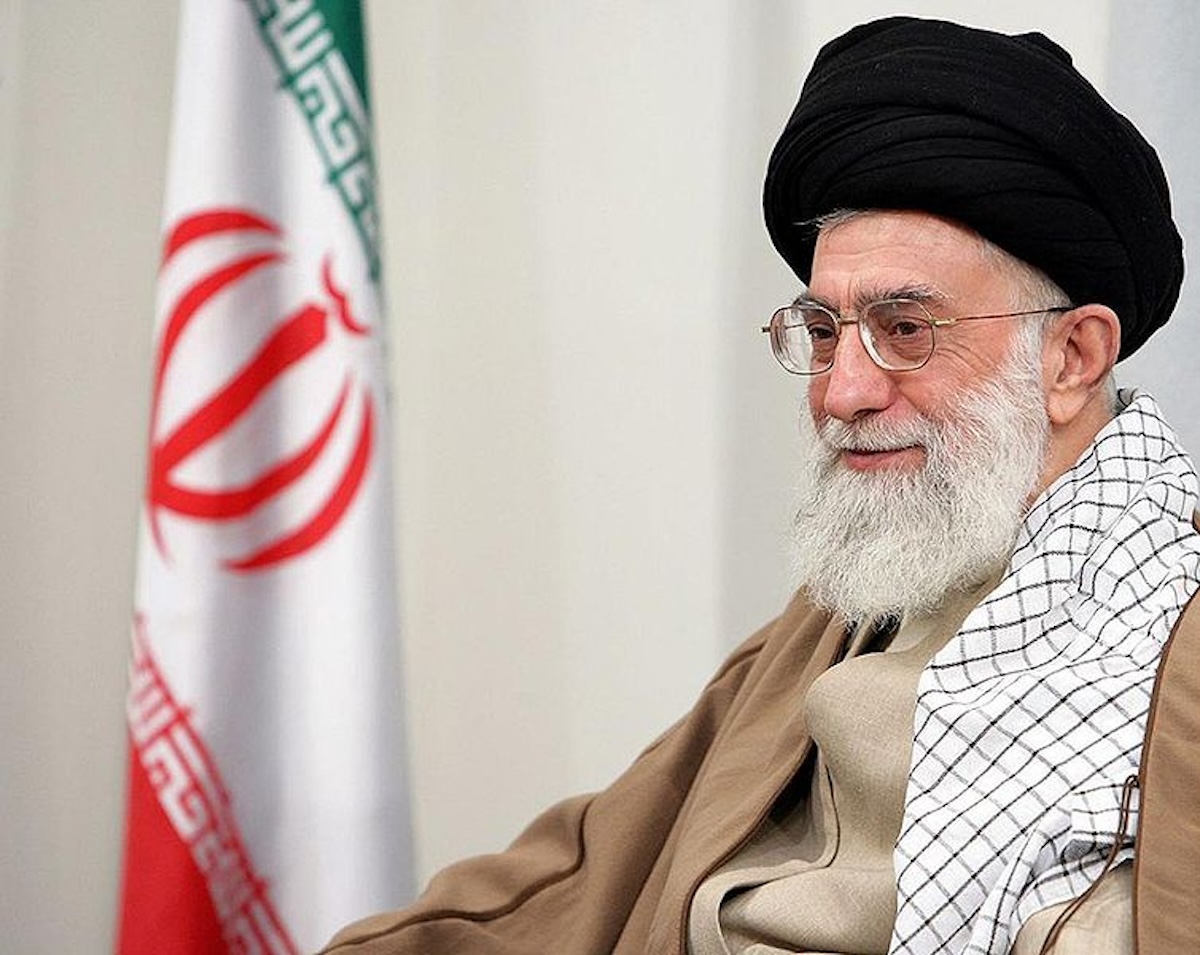
Ayatollah Ali Khamenei. Photo Credit: Wikimedia Commons. No changed were made to original photo.
But here is what the binary refuses to hold simultaneously: the Iranian people’s desire for governance reform and the Iranian people’s right to exist as a sovereign nation are not in tension. They are the same demand. A people cannot reform their own governance while their cities are being bombed, their leadership is being decapitated, and their right to self-determination is being extinguished by a foreign military campaign framed as liberation.
True solidarity with the Iranian grassroots means supporting both their agency and their survival. UTU does not choose between them.
The Efficient Monolith: The Chinese System and the Multipolar Gambit
If democracy is strictly defined by performance — delivering material needs, eradicating extreme poverty, and elevating expertise to guide complex decisions — the Chinese Communist Party operates the most formidable governance engine in the modern era.
The CCP has lifted more people out of material poverty in a shorter timeframe than any governance system in recorded history. It has built infrastructure at a scale and speed that no electoral system, subject to four-year mandates and donor capture, has been able to match. Its Belt and Road Initiative has created development corridors across the Global South that, whatever their debt architecture controversies, represent a genuine alternative to the IMF-World Bank structural adjustment model.
In the wake of the war on Iran, China’s strategic positioning has become more consequential. As the US dollar’s reserve currency status erodes under the weight of weaponized sanctions and the unmistakable message that any nation can be cut off from the global financial system for political non-compliance, China’s yuan-denominated trade frameworks and its anchoring role in BRICS+ monetary architecture are quietly building the infrastructure of a post-dollar world order. The payment of Hormuz transit fees in yuan during the crisis period is a small but symbolically significant data point: the financial plumbing of the new order is being laid in the middle of the crisis that is destroying the old one. China’s role, alongside Pakistan, in brokering the April 7-8 ceasefire is equally significant — the first major instance of China playing active mediator in a US-Israel military confrontation, a diplomatic role previously monopolized by Washington itself.
But under the lens of UTU, the CCP model still fractures — and here the fracture is foundational, not incidental. Democratic centralism assumes the ‘center’ always knows what the ‘periphery’ needs. It lacks the institutionalized ‘civic friction’ required for true citizen agency. The grassroots exists as a transmission belt to execute directives from Beijing rather than as an autonomous source of political mandate. When a system provides materially for the people but the people have no structural power to say ‘no’ to the government, citizens are subjects. Cared-for subjects, perhaps. But subjects nonetheless.
The CCP’s response to the emerging multipolar moment has been to expand China’s external sovereignty while tightening internal governance. This is a coherent strategic choice, but it is not UTU. A civilization that exports multipolarity abroad while maintaining monocentrism at home has not resolved the fundamental tension — it has merely displaced it.
Injecting UTU: The Structural Upgrades
We do not have to import Western multi-party chaos to fix these systems, nor accept the managed consensus of technocratic centralism. We can re-engineer them by injecting UTU directly into their structural architecture — ensuring that governance is permanently responsive to the organized, undeniable agency of the communities being governed.
1. Upgrading China: Institutionalizing the ‘Parallel Polis’
To balance its powerful technocracy, the Chinese system must institutionalize independent, bottom-up civic organizations — tenant unions, worker cooperatives, and localized community assemblies — with genuine structural authority, not performative consultation. Under a UTU framework, these bodies would not seek to overthrow the state; they would be granted a structural veto over local and provincial directives. If a central policy demonstrably harms the fabric of a local community, the grassroots assembly must have the legal power to halt it and force consensus-building. This transforms top-down compliance into mutual reliance.
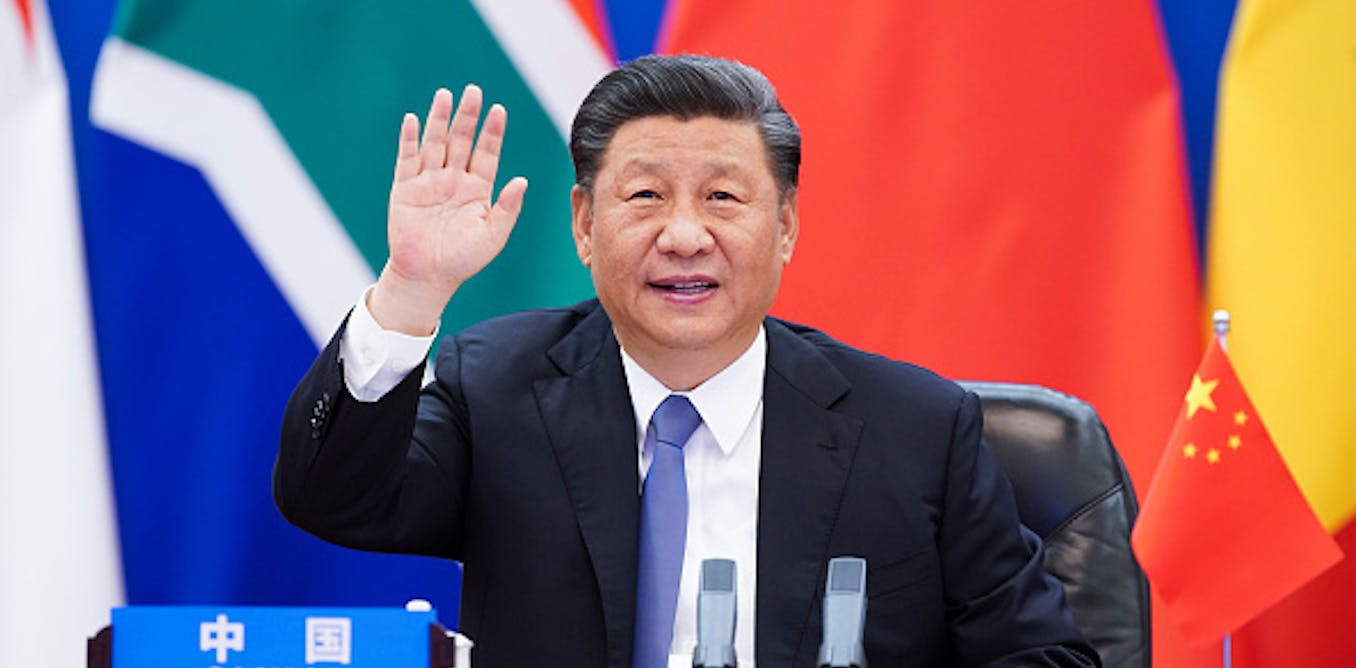
Chinese president Xi Jinping addressing the China-Africa Summit via a video link from Beijing on 17 June 2020.
Huang Jingwen/Xinhua via Getty Images
In the multipolar moment, China has an opportunity to model something genuinely new: a powerful state whose legitimacy derives not from electoral theater, but from continuous, demonstrable accountability to community assemblies. This would not weaken China globally. It would give it a governance philosophy that the Global South could actually choose to emulate rather than simply accept as the price of development financing.
2. Upgrading Iran: The Expanded Epistocracy
The Iranian concept of rule by experts — velayat-e faqih in its current clerical form — can be salvaged if it is radically decentralized and pluralized. The Assembly of Experts must be stripped of its theological monopoly. Instead of 88 clerics vetted for ideological purity by an unelected Guardian Council, the Assembly should be populated by representatives chosen directly by the society’s true pillars: human rights defenders, labor organizers, educators, scientists, women’s organizations, and independent civic bodies.
The epistocratic principle — that governance requires expertise, not merely popularity — is not inherently anti-democratic. The error is defining ‘expertise’ as religious credentialing rather than demonstrated service to the people. An Iran that governs through the wisdom of its communities, not just the authority of its clerics, would not need to suppress its own citizens to survive. And it would be far harder to demonize internationally when the faces of its governance are its doctors, its teachers, its farmers, and its engineers.
3. Upgrading the U.S.: Beyond Electoralism to Relational Governance
The Electoral College and the ‘winner-take-all’ gatekeeping architecture must be abolished — but electoral reform is the floor, not the ceiling. The war on Iran has exposed that the US system’s core failure is not a mathematics problem. It is a capture problem. A democracy in which a foreign policy lobby can override the expressed preferences of the electorate, in which military-industrial contractors write the legislation that funds their own contracts, in which algorithmic platforms monetize outrage while suppressing organizing, cannot be fixed by switching to ranked-choice voting.
A democracy in which a foreign policy lobby can override the expressed preferences of the electorate, and algorithmic platforms monetize outrage while suppressing organizing, cannot be fixed by switching to ranked-choice voting
True democratic upgrade requires dismantling the legal infrastructure of corporate capture: overturning Citizens United, publicly financing elections, breaking up the media consolidation that has turned the fourth estate into a fifth column for power. Beyond that, it requires building the parallel institutions that can hold governmental power accountable between elections — tenant unions, community land trusts, worker cooperatives, and localized civic assemblies that give communities structural power over the decisions that govern their daily lives.
The future is not four-year transactional popularity contests. The future is continuous, relational governance — where the communities being governed are never passive objects of policy, but permanent, active agents in its creation.
Operation Epstein Fury: When the System Produces Its Own Arsonist
To understand Benjamin Netanyahu and Donald Trump, you must first understand Lord Curzon.
In 1903, the British Viceroy of India articulated what would become the foundational doctrine of imperial statecraft in the Gulf: ‘We have no eternal friends, and no eternal enemies. We have only eternal interests.’ It sounds like realpolitik wisdom. It was actually a blueprint for the deliberate manufacture of instability as a governance technology.
Britain did not stumble into fr